You're probably weighing a job that keeps you out in the open, gets you moving, and pays for actual effort instead of screen time. Pipeline helper work fits that search better than often thought, but it's not one job. It's a family of field roles that support oil and gas, water, utility, and, in modern builds, telecom and fiber infrastructure.
The biggest mistake applicants make is treating every “pipeline” posting the same. In practice, the day looks very different depending on whether you're backing a welding crew on a transmission line, helping with maintenance on a utility corridor, or supporting fiber placement where the work is about staging, access, and clean installation practices. That split matters because the skills, safety expectations, and long-term path aren't identical.
Is a Hands-On Infrastructure Career Right for You
A lot of people reach this point after deciding they are done with work that feels invisible. They want something physical, something that ends the day with a visible result, and a job where preparation and follow-through show up in the final product. Pipeline helper jobs fit that mindset, especially if you work well on crews, can handle outdoor conditions, and learn best by doing the task in front of you.
The role sits inside a trades labor market that is steady and shaped more by replacement demand than by sudden growth. The Bureau of Labor Statistics says employment for welders, cutters, solderers, and brazers was about 431,000 in May 2024, with a median annual wage of $51,000 and projected growth of 2% from 2024 to 2034, while still projecting about 45,600 openings per year on average because of retirements and turnover in the occupation BLS occupation profile. That matters because helper roles usually feed into the same field ecosystem.
Practical rule: if you want a fast-moving desk job, this is the wrong fit. If you want a role where reliability, stamina, and safe execution matter every day, you are looking in the right place.
The entry barrier is moderate. The same BLS profile notes that the occupation typically requires a high school diploma or equivalent plus technical or on-the-job training. That makes pipeline helper jobs a realistic entry point for people changing careers, including applicants who are ready to learn a trade but do not yet have a long construction resume.
The primary distinction is by sector. Oil and gas pipeline work often centers on welding support, heavy civil access, and maintenance windows. Telecom and fiber work follows a different rhythm, because the route is part of a network build, and helper tasks usually focus on cable placement support, site prep, material staging, and clean handoff to splicing or construction crews. For a practical example of the kind of field setting where that discipline matters, see Southern Tier Resources' heavy civil construction work.
What a Pipeline Helper Does
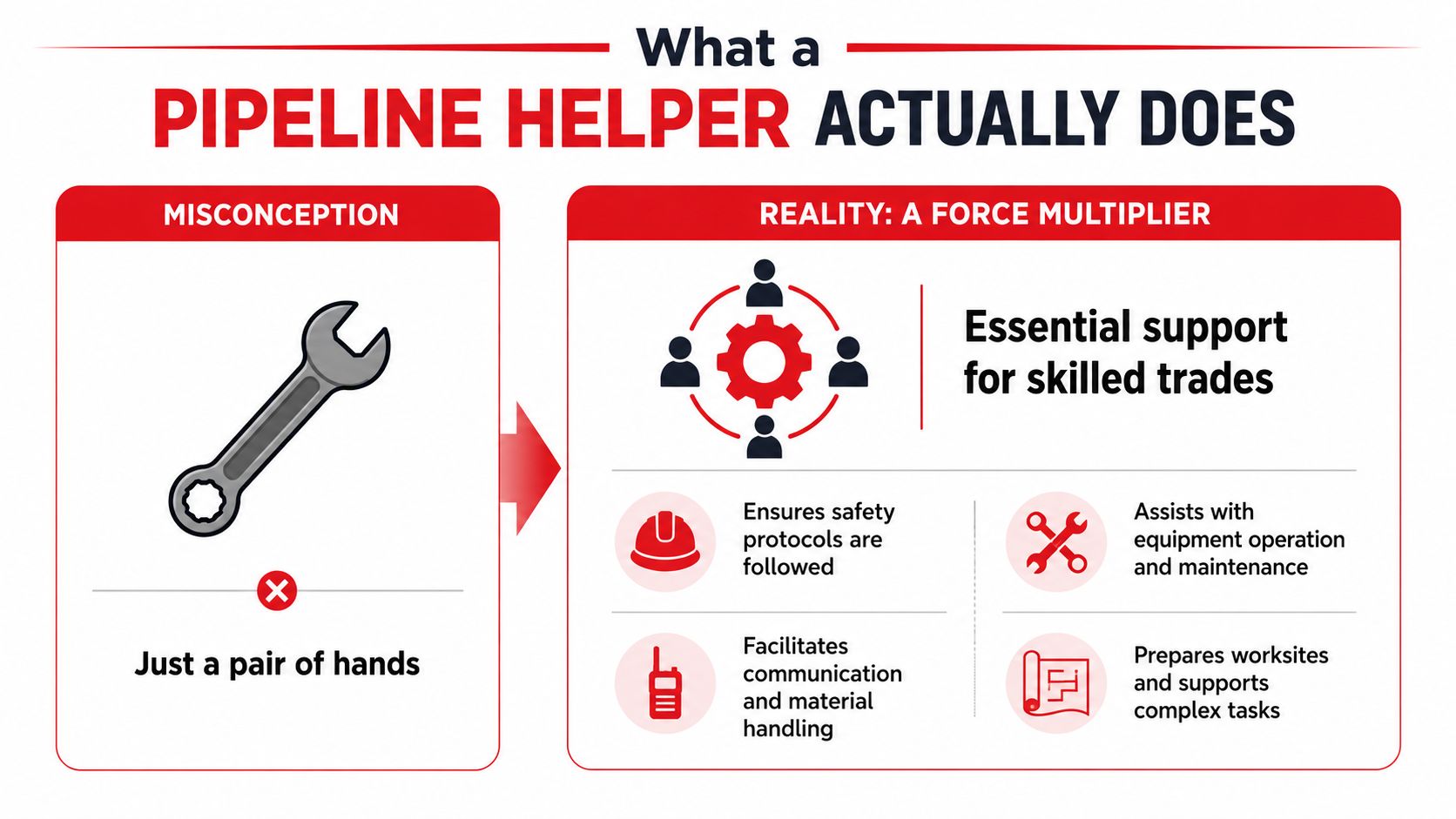
A pipeline helper keeps the crew productive by handling the support work that lets skilled trades stay on task. When a welder, technician, or splicer can start work with materials staged, tools ready, and the area cleared, the job moves faster and with fewer interruptions. That support is not background noise, it shapes how much a crew can finish in a day.
The work covers a wide range of field tasks. Helpers handle material handling, site preparation, equipment mobilization and demobilization, scaffolding support, and cleanup. In industrial settings, they may also assist with pump, valve, and pipe component work. In telecom and fiber builds, the same support mindset still applies, but the work often shifts toward staging fiber materials, supporting access routes, and keeping the site organized for splicing or testing teams.
| Pipeline helper path | Typical environment | What the helper supports | What success looks like |
|---|---|---|---|
| Oil and gas | Linear pipeline corridors, welding spreads, maintenance sites | Welders, inspectors, construction crews | Clean staging, tool readiness, safe access |
| Telecom and fiber | Aerial, underground, and utility-adjacent builds | Fiber crews, construction leads, testing teams | Organized materials, steady site prep, smooth handoff |
| Integrity and corrosion control | Field survey and cathodic protection work | Technicians collecting data and setting up equipment | Accurate setup, reliable readings, disciplined logging |
The job changes with the employer and the kind of pipeline work in front of the crew. Some openings are straightforward entry-level labor roles with room to grow into construction work. Others expect prior field experience and want someone who can step into an active crew without slowing the pace. That difference matters because pipeline helper jobs are not a generic labor bucket, they are a specialized support role across several infrastructure types. The U.S. pipeline transportation industry employed about 65,300 people in May 2025, which points to a narrow, technical workforce rather than a catch-all labor pool ZipRecruiter Texas pipeline helper overview.
Applicants who understand the sector split usually make stronger choices. If you are targeting telecom and fiber, focus on route discipline, site readiness, and helping crews stay organized around an installation sequence. If you are aiming at oil and gas, expect heavier emphasis on welding support, access, cleanup, and coordination around active construction windows.
The person who keeps the crew moving is often the one who notices the small things first, the missing fitting, the blocked path, the tool that needs to be staged before the welder asks for it.
A Day in the Life on the Pipeline
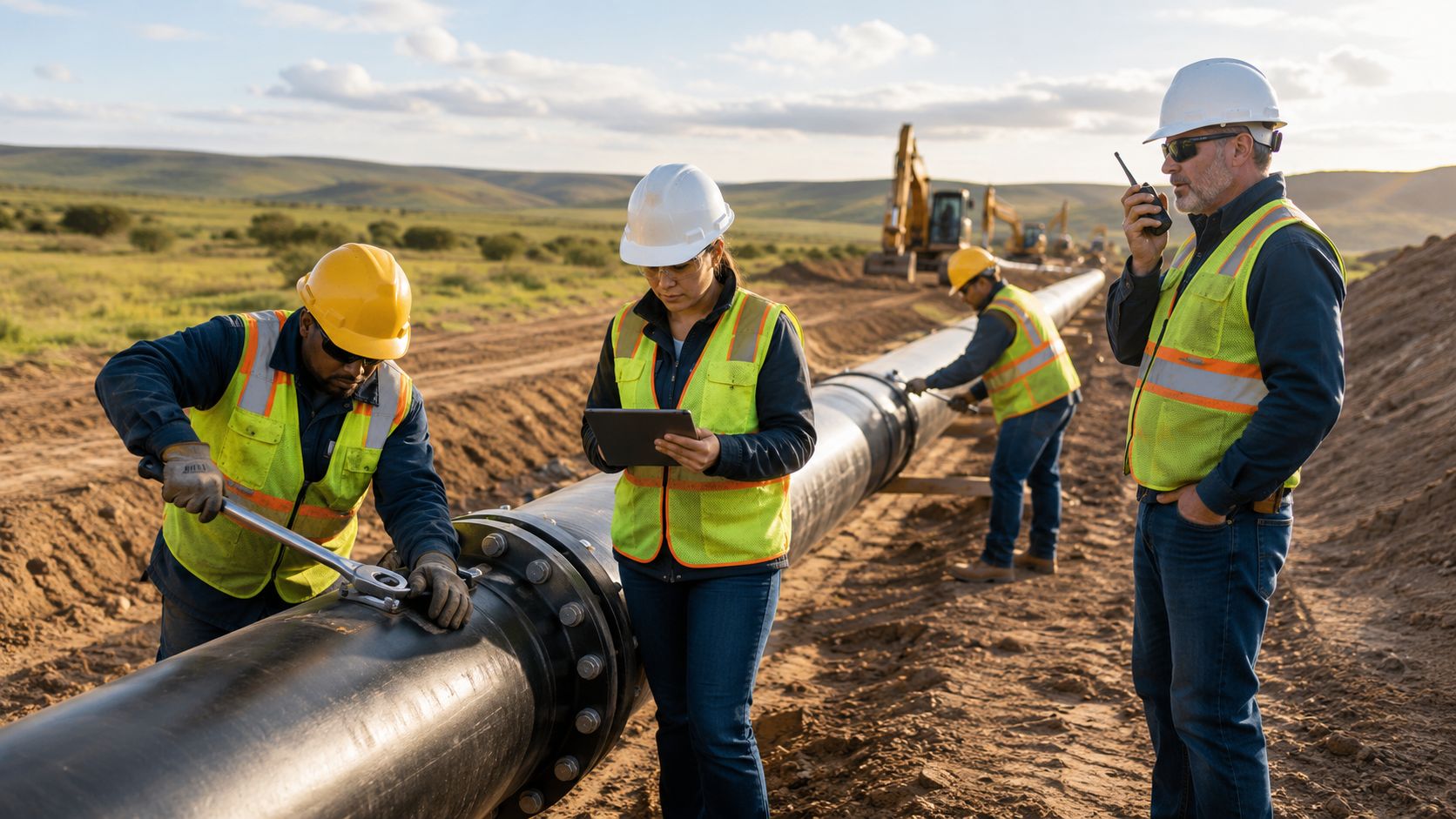
A pipeline helper's day usually starts before the work turns physical. The crew meets for the morning brief, reviews hazards, confirms assignments, and checks that the site is ready before material starts moving. If one person comes in late or disorganized, the whole crew feels it right away.
From there, the work follows a steady field rhythm. You stage materials, move equipment, help set up scaffolding or access, support the skilled trade on the active task, then clear the area so the next step can happen without delay. In pipeline helper postings, the schedule commonly runs 40 to 60 hours per week, so the job often stretches beyond a clean shift when construction or maintenance windows are open Indeed pipeline helper postings.
The day shifts with the crew and the type of infrastructure in front of you. On a welding spread, the helper may move leads, clear the area, and get the next section ready. On a telecom or fiber job, the helper is more likely to keep the build organized, carry materials, and help the crew stay on pace across a route.
That split matters. Oil and gas work usually puts more weight on welding support, access, cleanup, and coordination around active construction windows. Telecom and fiber work leans harder on route discipline, site readiness, and keeping the installation sequence moving without confusion. The pace may look similar from the outside, but the helper's priorities change with the system being built.
A typical day usually breaks down like this:
- Morning setup: check gear, review site conditions, and prepare the work area.
- Midday production: support the skilled trade, move materials, and keep the job flowing.
- Late-day closeout: clean the site, secure equipment, and prep for the next shift.
That mix of duties matters because a helper's work affects crew cycle time every hour. If the welder, technician, or installer has to stop to search for tools or move materials, the job slows down. A good helper keeps that drag off the crew.
The video below gives a useful visual on the pace and coordination that field crews deal with.
What catches new hires off guard is not only the physical side. It is the repetition of doing small things correctly, over and over, while staying alert. That discipline is what separates someone who lasts from someone who quits after the first hard week.
Skills and Certifications You Need to Get Hired
The first thing employers look for is not a fancy resume. They want someone who's reliable, pays attention, and can work inside a crew without creating extra problems. A strong work ethic, the ability to take direction, and a team-first attitude matter because pipeline jobs are built around coordination.
The second layer is safety and basic field readiness. For integrity and corrosion-control work, helper roles can be technically demanding, supporting cathodic protection installation and testing. Field pathways may include assisting with Close Interval Surveys, meter setup, and data collection, with OSHA 10 or SafeLand often preferred and progression toward NACE Level I certification explicitly noted in career pathways CP helper job pathway. That's a different level of expectation than generic labor.
What employers actually respond to
- Show up clean and prepared. That sounds basic, but field crews notice it immediately.
- Know the safety language. Spotting hazards, following directions, and handling equipment the right way are part of the job from day one.
- Be trainable. Crews don't need a know-it-all helper. They need someone who can learn sequence, pace, and site discipline.
- Mention any site credentials. If you've got OSHA 10, SafeLand, or similar training, put it front and center.
The best candidate for pipeline helper jobs understands that the work can branch into specialized paths. Integrity crews need people who can help with accurate setup and data collection. Construction crews need people who can keep material flow tight. Telecom crews need people who can support orderly installation work without slowing the line.
If you're comparing employers, look hard at what they expect beyond “helper.” Some are offering a straight entry point. Others want prior pipeline experience and a smoother ramp into specific tasks. That difference matters because a job title alone doesn't tell you whether you're entering a true learning path or just filling a labor slot.
If the posting names a certification pathway, treat it as a signal. It usually means the employer wants someone who can grow into technical work, not just swing a shovel.
Safety Training and On-the-Job Realities
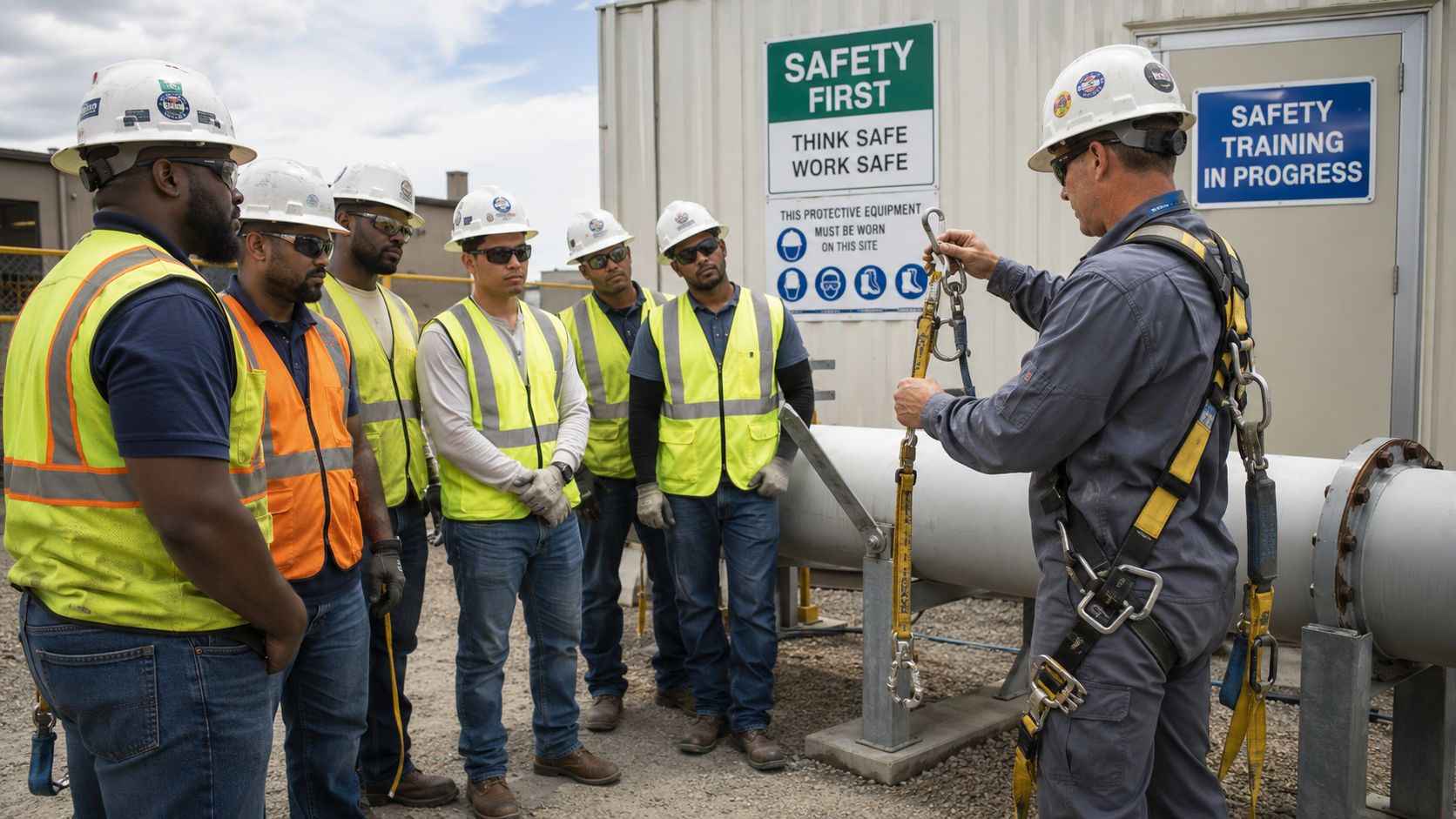
Safety is not a side topic in pipeline work. It's the job's operating system. If a helper doesn't understand site rules, flagging, spotting, and equipment handling, the crew loses time and takes on avoidable risk.
Government and industry policy have put pressure on employers to build better talent pipelines for infrastructure work, including broader workforce development tied to these jobs Talent Pipeline Challenge fact sheet. That lines up with what crews already know in the field. People who treat safety as a habit, not a speech, move up faster.
The practical reality is simple. A helper who follows PPE rules, keeps eyes on the work zone, and stays disciplined around moving equipment becomes useful fast. A helper who cuts corners becomes a liability. That's true on heavy civil pipeline work and just as true on telecom infrastructure jobs, where the work may look lighter but still depends on controlled access, careful handling, and good site habits. Southern Tier Resources' power line construction contracting work sits in the same safety-first world of field coordination and utility exposure.
In interviews, talk about safety the way crews talk about it in the field. Don't say you “value safety” and leave it there. Say you've learned to watch for hazards, follow site direction, and ask before you touch equipment you don't understand. That sounds simple, but it's exactly what foremen want to hear.
The strongest workers treat safety training as career capital. It helps you get hired, but it also affects whether people trust you with more responsibility. That's where advancement starts.
Pay Scales and Career Progression Paths
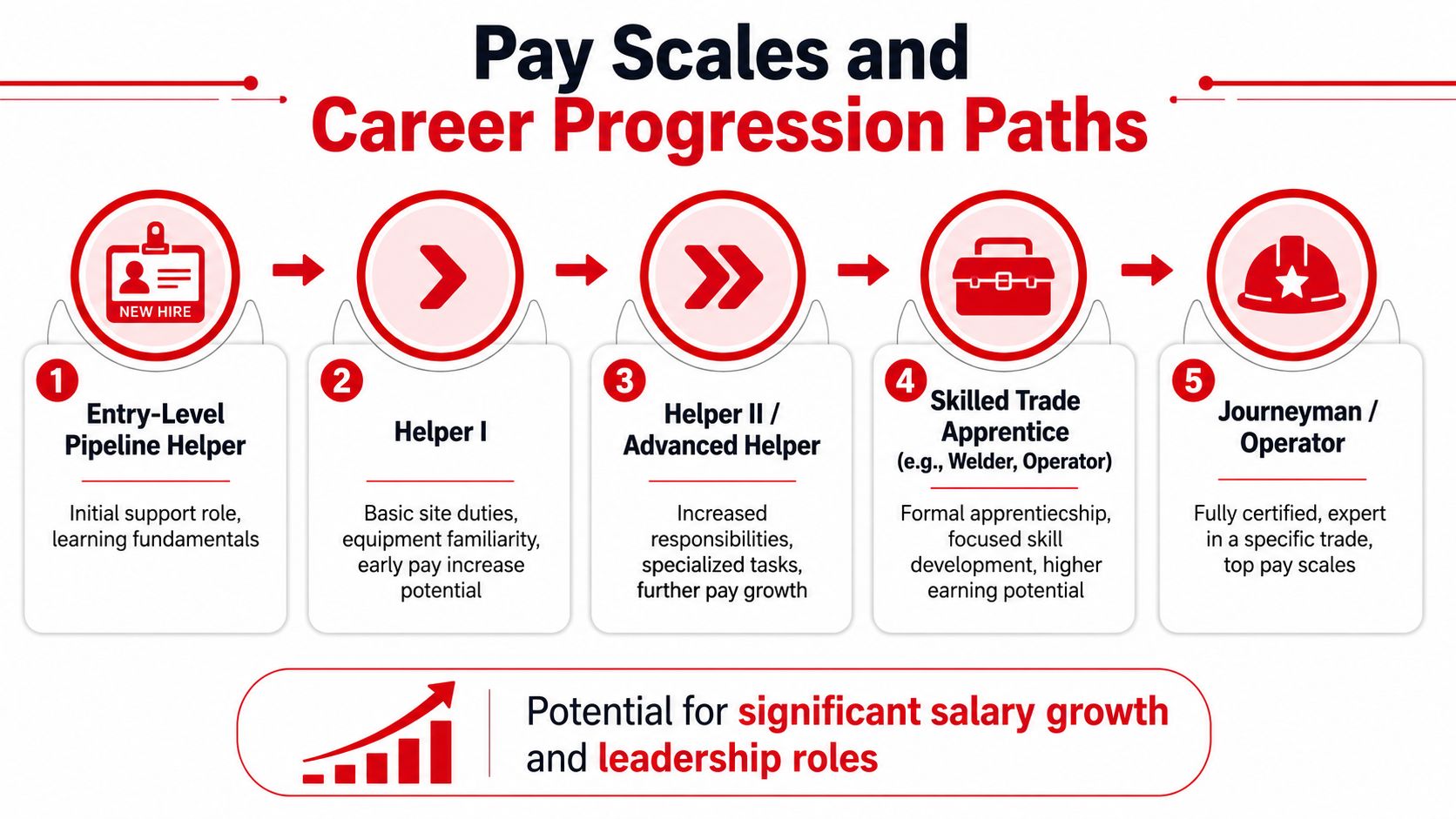
Pay depends on the employer, the region, and the kind of project you are on. ZipRecruiter pay data shows the average hourly rate for a pipeline welders helper in the United States at $17.73, with most workers earning between $15.38 and $19.23 per hour ZipRecruiter pay data. For California, the same source shows average pay at $17.96 per hour, with a median wage of $16.19 and most workers ranging from $14.23 to $18.03 per hour.
Those numbers fit the reality of field work. Oil and gas pipeline crews often pay based on demanding conditions, travel, and the level of responsibility a helper can take on safely. Telecom and fiber crews may follow a different pay structure because the work centers on utility access, line handling, and support tasks that still require discipline, even if the equipment and site setup are different. A helper who can move between those environments without slowing the crew usually has more options.
Canada shows a different but related picture. Job Bank occupation data lists a pipeline welder helper-related occupation in British Columbia with a median wage of $25.00 per hour and 372 advertised jobs, while also noting limited job prospects in the province. Nationally, the same source reports 143,200 employment in 2023 for the broader occupation group and says 20% of workers were aged 50 and over. That points to replacement hiring as older workers leave the trade, even where growth is modest.
The career path is straightforward on the ground. A helper can start in support work, move into a more specialized helper role, then progress into apprenticeship or another skilled path such as welding, equipment operation, or fiber work. From there, dependable workers can move into lead hand or supervisory work once they have proved they can keep a site moving and make good decisions under pressure.
The difference between oil and gas and telecom or fiber matters here. In traditional pipeline work, advancement often follows heavy civil experience, welding support, and equipment familiarity. In telecom and fiber infrastructure, a helper can build a career through utility-side construction, conduit work, and line support, then move into more technical field duties as the crew trusts the person's judgment. Southern Tier Resources' utility contracting page is a good example of the kind of employer where that path can show up in real job postings.
Entry-level helper pay is still entry-level pay. The job pays better when you treat it as the start of a trade path, keep learning on site, and build the reputation that lets a foreman hand you more responsibility.
How to Find and Apply for Pipeline Helper Jobs
Start where the work gets posted. Company career pages, industry-specific job boards, and local union halls are usually more useful than broad search results, because they show whether the employer wants a true entry-level helper or someone with pipeline experience already in hand. If you're looking at telecom and utility-side work, Southern Tier Resources' utility contracting page is a practical example of the kind of employer page where field roles can show up.
Your resume should be short, direct, and built around field usefulness. Lead with safety training, construction exposure, mechanical aptitude, driving experience if it applies, and any work where you had to show up early, follow instruction, and keep a site moving. Skip the fluff. A foreman scanning resumes wants to know whether you can be trusted with tools, time, and a crew rhythm.
For interviews, keep the answers grounded.
- Talk about reliability first. Field crews hate uncertainty more than hard work.
- Show willingness to learn a trade. Employers want helpers who can grow, not just pass through.
- Be specific about safety. Mention PPE, site awareness, and respect for direction.
- Ask about the pipeline type. Oil and gas, utility, and telecom work are not interchangeable, and the employer should be able to explain the difference.
One thing that helps a lot is asking what the helper role supports. If the answer is welding, integrity work, or fiber construction, you know what skills to emphasize. If the answer stays vague, the posting may be broad labor rather than a real entry path.
The strongest applicants don't oversell themselves. They show they understand the work, want the training, and can handle the pace. That combination gets noticed fast in a trade where crews remember the people who made their day easier.
If you're ready to move from curiosity to a real field role, start by reviewing current openings, matching your resume to the type of pipeline work you want, and reaching out to employers that work in telecom, utility, or heavy civil construction. A direct application with proof of safety training and a clear willingness to learn will get a better response than a generic submission, so take a few minutes to do it right, then apply with confidence through Southern Tier Resources.