Somewhere in Indiana right now, someone is staring at another shift indoors and thinking the same thing a lot of good hands think every year: I need work that’s true. Not email. Not meetings. Work where you can point at a line, a pole, a splice case, a rebuild, and say, I helped put that in service.
That’s where a lot of linemen start mentally. They want a trade with purpose, better pay over time, and a clear ladder if they’re willing to earn it. They don’t mind weather, tools, mud, heights, or long days. What they usually don’t get from most career guides is the honest version.
The honest version is this. Lineman jobs indiana can be a strong path, especially if you’re trying to break in through groundhand, helper, or no-experience roles. But the field is demanding, the washout rate is true, and hiring managers can spot quickly whether you understand what the work asks of you.
Indiana gives you a true shot because the state has utility work, telecom work, underground work, signal work, and the kind of broadband and infrastructure buildout that keeps crews moving. The best approach isn’t to chase the highest pay headline first. It’s to understand the route from entry-level work to apprentice, then to journeyman, and to show up already moving in that direction.
Is a Lineman Career in Indiana Right for You
If you’re the kind of person who’d rather run a bucket, pull material, read a print, or climb than sit behind a screen all day, this trade makes sense. If you need constant comfort, predictable hours, and climate control, it probably doesn’t.
Indiana needs people who can help keep power systems working and build the physical network behind broadband, fiber, and communications. That means the job matters on utility crews and telecom crews alike. You’re not doing abstract work. You’re helping keep homes connected, businesses running, and restoration work moving when something fails.
What the job feels like in real life
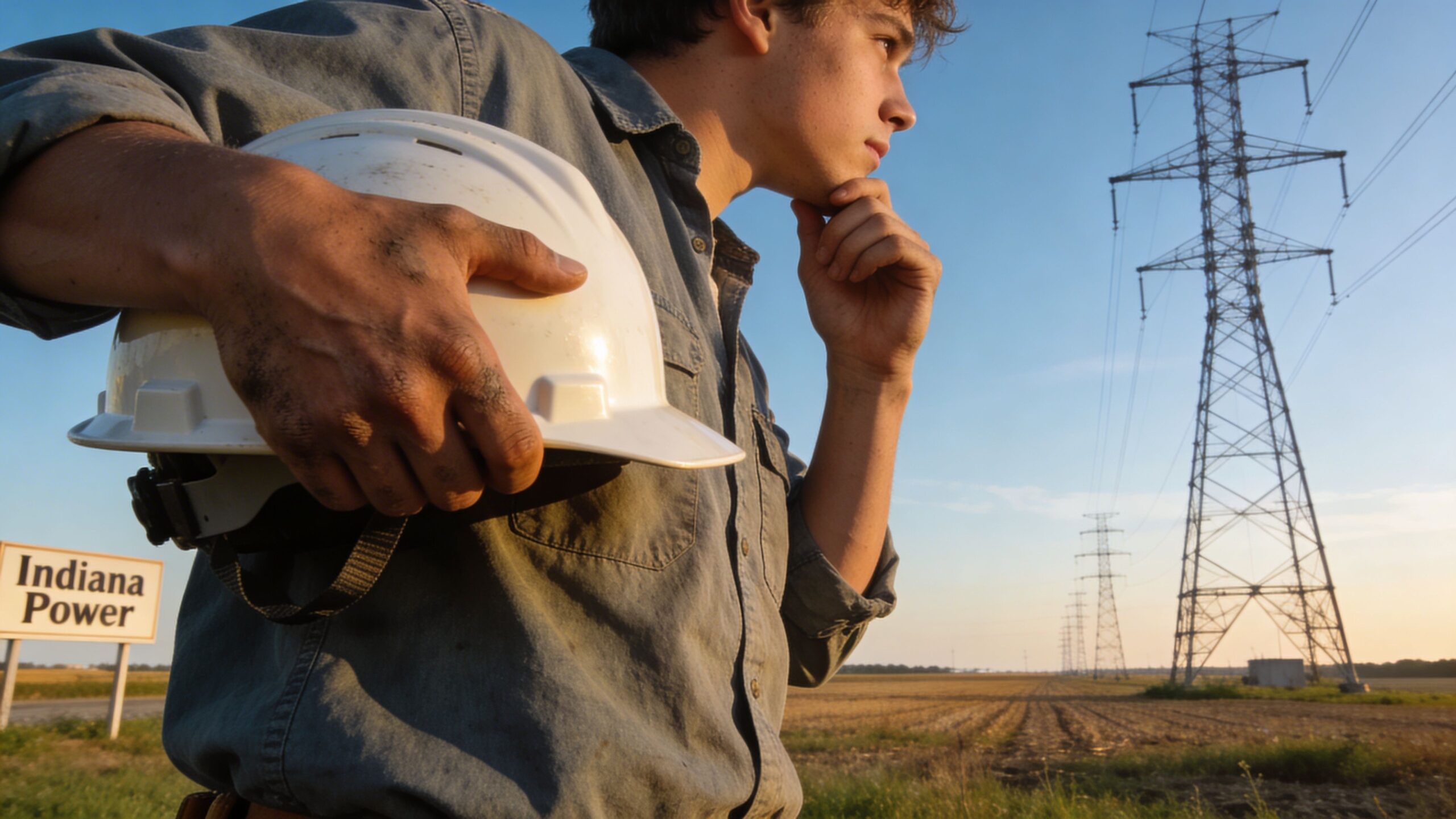
At entry level, nobody expects you to know everything. They do expect you to be coachable, physically reliable, and serious about safety. You might start handling material, setting up tools, learning basic rigging, spotting for equipment, or supporting a crew doing aerial or underground work.
People from construction, trucking, farming, military service, warehouse operations, and industrial maintenance adapt well because they already understand early starts, chain of command, and working around risk. If that sounds like you, it helps to think through your transferable skills for career changers before you ever submit an application.
A good beginner doesn’t need to look polished. A good beginner needs to look dependable.
Who usually does well
Some people are drawn by the paycheck and quit when the work gets ugly. The ones who stay usually have a few traits in common:
- They like hands-on work: They’d rather learn on a truck, at a pole, or in the yard than in a conference room.
- They take correction well: A foreman’s direct feedback doesn’t bruise them.
- They respect risk: They don’t act casual around energized systems, traffic, heights, or equipment.
- They want a ladder, not a shortcut: They understand groundhand to apprentice to journeyman is earned.
If that sounds like you, Indiana is worth a serious look.
The Indiana Lineman Job Market in 2026
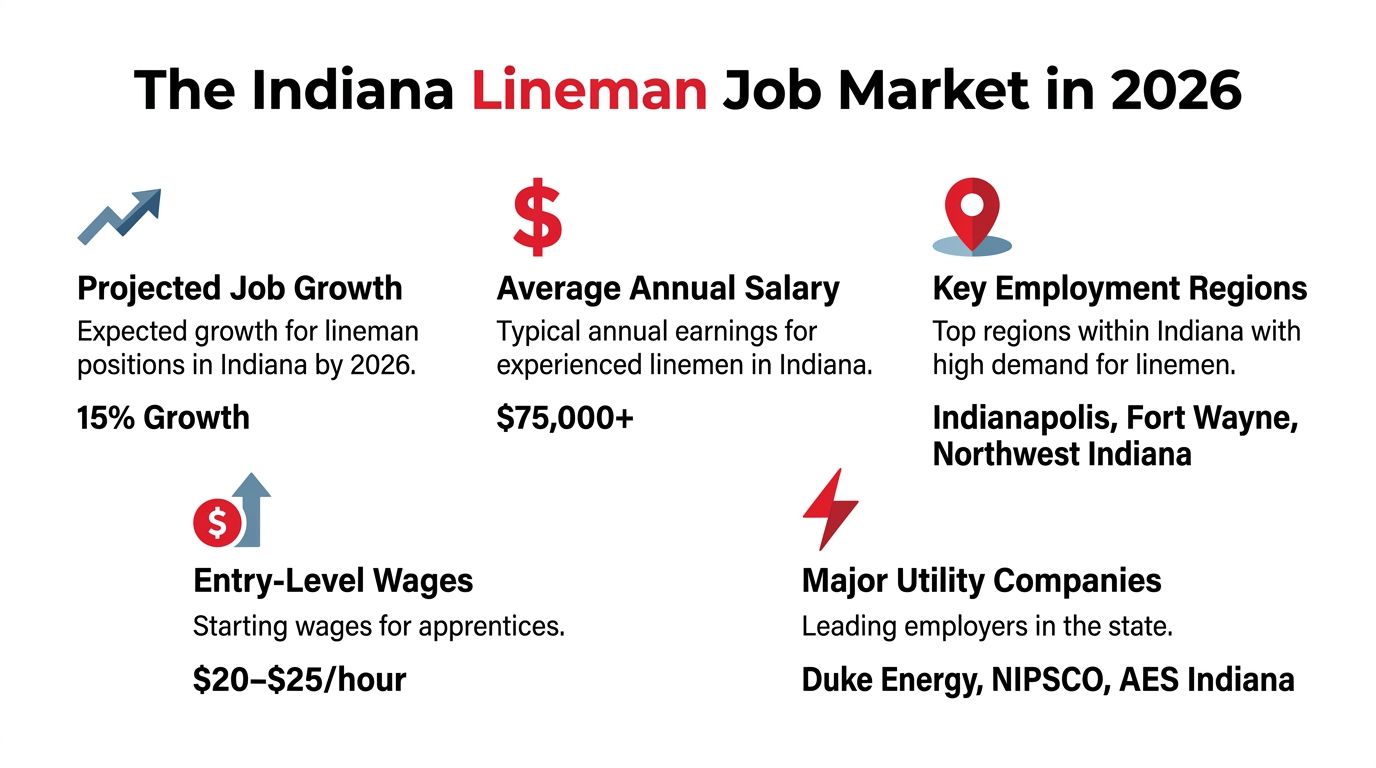
A beginner in Indiana can get hired this year, but the cleanest path usually is not the one people search first. Hiring managers see plenty of applicants chasing journeyman wages with no field history, no CDL plan, and no interest in starting on the ground. Those applications usually die fast. The people who get traction are the ones willing to enter through groundhand, telecom labor, underground support, or an apprentice opening and prove they can carry their share of the load.
Indiana has room for both utility and telecom workers, and that matters if you are trying to break in without experience. Utility jobs are often more structured, slower to access, and stricter on entry requirements. Telecom and broadband contractors can be a more practical first stop because they hire for buildouts, make-ready work, underground support, and crew labor where a reliable new hand can grow into more responsibility. Companies that support field staffing and deployment, including Southern Tier Resources, are part of that hiring picture.
Where the openings really are
A lot of job seekers treat all lineman postings like they mean the same thing. They do not.
Some jobs are true power distribution roles. Some are underground construction. Some are telecom line work. Some are support positions that put you around the trucks, tools, and crew flow without putting you in a journeyman seat on day one. If you are new, read past the title and check the duties, license requirements, travel schedule, and whether the employer is hiring for a long-term crew need or just filling a short build cycle.
That distinction saves time. It also keeps beginners from applying blind to jobs built for experienced hands.
What pay looks like as you move up
Pay in Indiana can be strong, but the ladder matters more than the top number. Groundhand pay is one thing. Apprentice pay is another. Journeyman pay is earned after years of safe production, storm work, and a lot of days doing the hard jobs first.
| Experience Level | Role Title | Annual Salary Range |
|---|---|---|
| 0+ years | Groundhand | $48,560+ |
| 2 to 4 years | Lineman Apprentice | $58,350 to $81,750 |
| 7+ years | Journeyman Lineman | $90,110 to $136,608 |
Those ranges line up with the Indiana pay progression widely cited across industry job boards in 2026. The practical lesson is simple. Entry-level workers do not need top-end pay on day one. They need a role that gets them hours, training, and a real shot at advancing.
Geography changes your options
Where you live in Indiana affects both the kind of work available and how fast you may get a start. Utility-heavy areas can offer stronger long-term tracks, but they also draw more competition. Fast-moving contractor work around fiber expansion, underground construction, and regional infrastructure builds can open doors quicker, especially for workers who are willing to travel, work overtime, and start in support roles.
Mobility helps. So does a CDL plan.
A lot of employers will train the right person, but very few want to gamble on someone who has no route toward driving company equipment. If you are trying to break into lineman jobs in Indiana, get familiar with the Indiana CDL requirements early so you know what will be expected before an offer depends on it.
The beginner opportunity other guides miss
The strongest no-experience candidates are not always the ones with the best-sounding resume. They are usually the ones who understand what entry-level work looks like and accept it without attitude.
That can mean hauling material, setting up a jobsite, potholing, learning traffic control, spotting equipment, assisting with rigging, or spending months proving you can show up at 5 a.m. and stay sharp for a full shift. It is not glamorous work. It is still the front door.
Indiana’s turnover creates openings here. Some new hires wash out because they wanted the title, not the conditions. Early mornings, weather, travel, mud, cramped rights-of-way, and direct supervision run a lot of people off. Contractors know that. That is why a realistic beginner who understands the work has a better shot than an applicant who talks big and looks fragile in an interview.
What hiring managers are screening for
At the entry level, employers are usually trying to answer a short list of practical questions:
- Can this person work safely around equipment, traffic, heights, and live jobsite pressure?
- Will they take instruction without arguing every correction?
- Can they handle travel, schedule changes, and overtime without falling apart after two weeks?
- Are they working toward a CDL and the basic credentials that make them more useful on a crew?
- Do they want a trade, or are they just chasing a number they saw online?
This is the market in 2026. There is opportunity in Indiana, especially on the beginner side, but it goes to applicants who understand where the trade starts and who are willing to earn their way into better roles.
Building Your Foundation with Training and Certifications
The strongest entry-level applicants don’t wait for an employer to build all of their basics for them. They show up with enough groundwork that a hiring manager can picture them surviving the first months on a crew.
That starts with education, a CDL plan, and a realistic understanding of what training covers.
Start with essential requirements
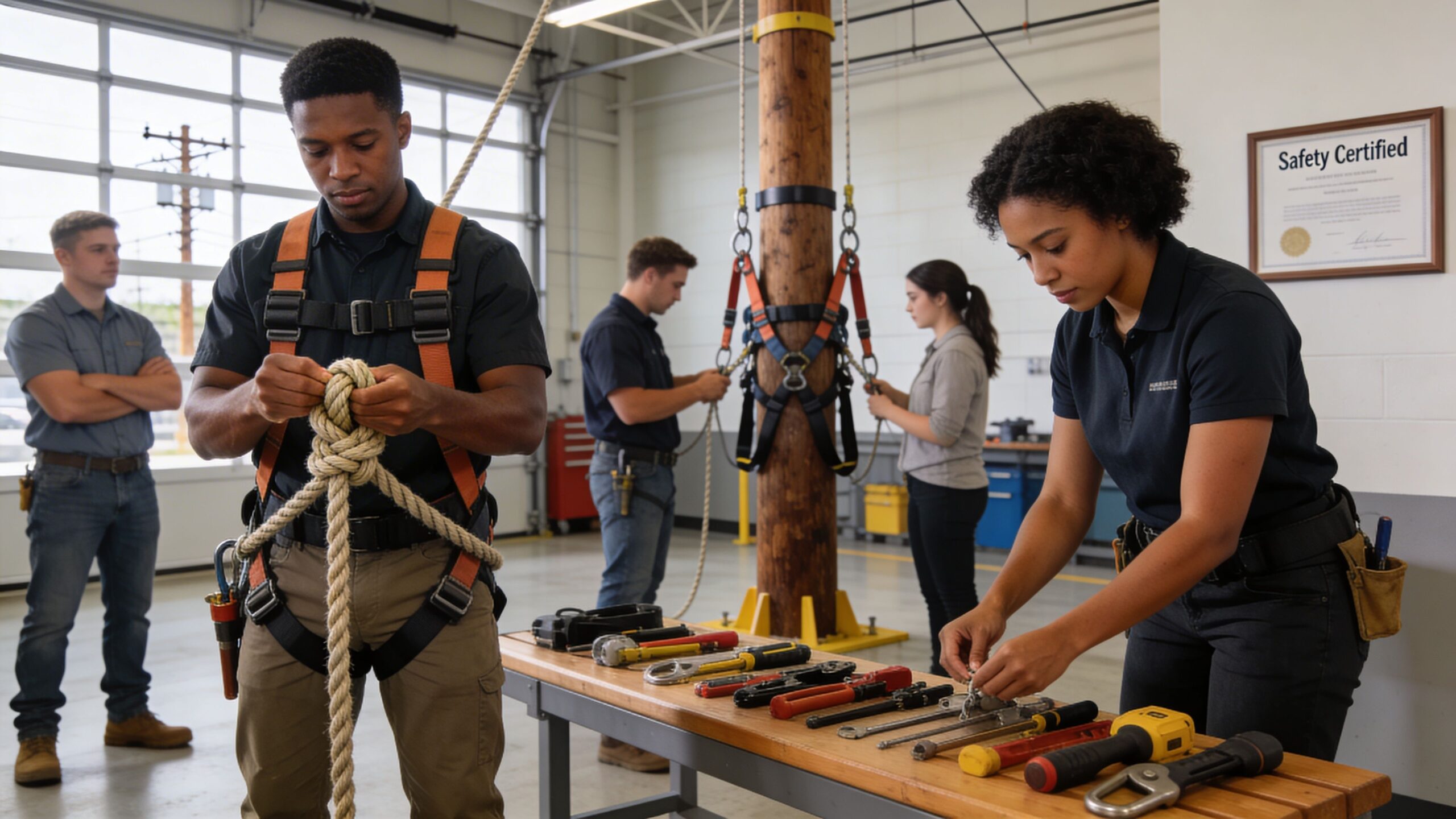
Formal apprenticeship programs in Indiana don’t begin with guesswork. The Hoosier Energy model requires a high school diploma with demonstrated math and science coursework, and its apprenticeship structure starts with a six-week intensive program covering climbing, pole-top rescue, basic electrical theory, grounding, rigging, and troubleshooting before field deployment, according to the Hoosier Energy apprentice lineman program document.
That should tell you something important. Employers don’t just want enthusiasm. They want a foundation.
The basics usually include:
- A diploma or equivalent: You need to clear the minimum education bar.
- Comfort with math and mechanical concepts: Not advanced theory. Solid basics.
- Driver readiness: A crew can’t use you well if transportation and license requirements become a problem.
- Physical confidence: Climbing, lifting, bending, and working outdoors can’t be a shock to your system.
Why the CDL matters early
If you’re serious about this path, don’t treat the CDL as paperwork you’ll worry about later. Many lineman roles and apprenticeships either require it or strongly prefer candidates moving toward it because crews use line trucks, trailers, and heavy equipment support.
If you need a practical starting point, review the Indiana CDL requirements so you understand the licensing path, endorsements, testing process, and what could slow you down.
A lot of beginners sabotage themselves here. They wait until after applying to think about license eligibility, medical requirements, or driving history issues. Hiring managers notice that immediately.
What pre-apprenticeship training provides
A good training program does two things. It teaches core field habits, and it shows employers you’re not walking in blind.
You’re not buying a guaranteed job. You’re buying a shorter learning curve.
Here’s the kind of baseline that matters most:
- Climbing fundamentals: Even if your first role is ground-based, employers want to know you’re not frozen by heights.
- Pole-top rescue exposure: Safety training carries weight because crews need people who take procedure seriously.
- Tool familiarity: Hand tools, power tools, rigging gear, and truck-side organization matter more than beginners think.
- Basic electrical theory: Enough to follow instruction and understand why separation, grounding, and sequence matter.
- Worksite discipline: Showing up early, taking direction, and keeping gear in order is part of training too.
There are also field-oriented training resources that can help candidates get closer to job-ready before they ever land an apprenticeship. For example, programs tied to outside plant and utility skill development can help someone understand what field preparation looks like, including options like this lineman-focused training path.
What employers can teach, and what they won’t fix
A crew can teach you methods, standards, and local practice. They can’t fix attitude, fear of physical work, or sloppy habits around safety and instruction.
That’s why some applicants with less experience get hired over applicants with more. The less experienced candidate looks trainable.
Practical rule: Show that you’ve already started building the trade around your life, not that you’re waiting for the trade to build itself around you.
This is also where video helps. If you haven’t spent much time around the work, watch training footage and pay attention to movement, body positioning, communication, and pace.
A simple foundation checklist
Before you apply widely, make sure you can confidently say most of this is in place:
- You’ve handled the minimum education requirement.
- You’re working on CDL readiness or already have it.
- You’ve built some exposure to climbing, rescue, rigging, or electrical basics.
- You can explain why you want utility or telecom linework specifically.
- You’re physically preparing for outdoor work, lifting, and long days.
That’s the difference between “interested” and “hireable.”
Choosing Your Path to Journeyman Lineman
There isn’t one perfect road into the trade. In Indiana, many individuals move toward journeyman status through one of three lanes: union apprenticeship, utility-sponsored training, or contractor-based progression.
Each one works. Each one also has trade-offs.
The reason this choice matters early is simple. National turnover in the field runs 20% to 30%, and Indiana’s market includes over 60 no-experience listings, according to ZipRecruiter’s Indiana underground lineman market overview. A lot of people don’t leave because the trade has no opportunity. They leave because they picked a path that didn’t match how they work, travel, learn, or handle pressure.
Union apprenticeship
The union route appeals to people who want a formal system. Training standards are typically more structured, progression is clearer, and expectations are laid out from day one.
That can be a major advantage for beginners who learn best inside an established framework.
Where it tends to fit best
- People who want a standardized apprenticeship model
- Candidates who value defined progression and strong benefit structures
- Workers who are comfortable with a formal chain of command and established rules
Trade-offs to think through
- The process can feel slower if you’re eager to move immediately
- You may have less flexibility in how assignments unfold
- Competition can be stiff because a lot of candidates target the same path
Utility-sponsored apprenticeship
A utility route often gives you stability with one employer and one operating environment. That can be a good fit if you want to learn one system thoroughly instead of bouncing across different job types early.
Some Indiana utility paths are demanding on prerequisites. The Hoosier Energy model, for example, is very competency-driven. The NIPSCO pathway referenced in apprenticeship materials requires substantial documented job experience before journeyman certification.
Best fit for utility candidates
Utility-sponsored programs usually work well for people who want:
- Consistency: Same employer, same operating culture, same standards
- Strong supervision: You learn under experienced line leadership with clear expectations
- Long-term local identity: Some workers like building a career with one company instead of moving project to project
The catch
Utility environments can be selective, and they often want candidates who already look steady, mature, and low-risk. If your resume reads scattered, they’ll notice.
If you want utility work, act like someone who values routine, accountability, and long-term commitment. Utilities hire for that.
Non-union contractor route
The contractor path is often the fastest way to build broad field exposure. You may see aerial work, underground work, make-ready, storm support, telecom-adjacent construction, and different crew cultures sooner than you would in a single-utility setting.
That variety helps the right person. It can also wear out the wrong one.
Contractor environments tend to suit candidates who want to get moving, prove themselves fast, and pick up field judgment across different kinds of work. The downside is that the pace, travel, and project variation can be harder on people who need a fixed routine.
How to choose thoughtfully
Don’t choose based on internet arguments about union versus non-union. Choose based on how you operate.
Ask yourself:
- Do I learn best in a rigid structure or in a faster field environment?
- Do I want one employer and one system, or varied project exposure?
- Can I handle travel, shifting crews, and changing jobsite conditions?
- Am I trying to build a power-focused career, a telecom-focused career, or broad line experience first?
What all three paths have in common
No matter which lane you pick, you need to earn trust the same way.
You earn it by:
- Showing up early.
- Taking correction without ego.
- Respecting safety rules every time.
- Learning the truck, the tools, and the material.
- Staying steady when the work gets dirty, cold, hot, or repetitive.
The path matters. Your habits matter more.
A good apprentice doesn’t talk like a journeyman in month two. A good apprentice listens, retains, and gets stronger every week. That’s what moves you from “new guy” to someone the crew wants beside them.
Crafting a Standout Resume and Nailing the Interview
Most entry-level applicants lose before the interview because their resume reads like they have no connection to linework. That’s false. They just don’t know how to frame their experience.
If you’ve worked construction, warehousing, trucking, agriculture, military operations, rail, mechanical service, or industrial labor, you already have parts of what hiring managers want. Your job is to translate it into crew language.
What hiring managers look for
They’re not hunting for the prettiest resume. They’re scanning for signs that you can work safely, follow direction, handle physical tasks, and stay reliable under pressure.
That means your resume should surface things like:
- Equipment familiarity: Bucket trucks, trailers, power tools, hand tools, test equipment, or heavy material handling
- Safety culture: PPE compliance, lockout awareness, spotter duties, jobsite briefings, hazard recognition
- Outdoor work history: Weather exposure, early starts, travel, shift work, or emergency response
- License and training status: CDL, OSHA-type training, rescue exposure, climbing exposure, or electrical basics
- Attendance and dependability: Long tenure matters more than clever wording
How to rewrite ordinary experience into relevant experience
A weak bullet says this:
- Helped on construction jobs and worked with tools
A stronger bullet says this:
- Supported field crews on outdoor jobsites, handled materials, used hand and power tools, followed supervisor instruction, and maintained jobsite safety practices
A weak bullet says this:
- Drove trucks
A stronger bullet says this:
- Operated work vehicles and trailers, completed pre-trip checks, maintained equipment readiness, and supported time-sensitive field operations
The point isn’t to exaggerate. It’s to show the overlap.
Keywords that help without sounding fake
Use words you can defend in person. Good examples include:
- Ground support
- Material handling
- Rigging
- Bucket truck
- Tool accountability
- Safety compliance
- Outdoor field work
- Preventive maintenance
- Crew support
- Troubleshooting
- CDL
- PPE
- Jobsite communication
If you haven’t done something, don’t add it because you saw it online. A foreman can tell inside five minutes.
Interview mistakes that sink good candidates
The interview is where attitude shows up.
The wrong answers sound like this:
- “I’m looking for something that pays well.”
- “I don’t mind hard work.”
- “I can do anything.”
Those answers are empty. Everybody says them.
Better answers are specific. Say you want outside work, a trade with advancement, and a role where safety, equipment, and teamwork matter. Say you understand the job includes weather, physical strain, and a learning curve. That sounds like someone who’s thought it through.
Questions you should be ready for
You’ll likely get some version of these:
- Why linework and not another trade?
- Tell me about a time you followed a safety rule you didn’t fully agree with.
- What have you done that proves you can work in bad weather or under physical stress?
- How do you take correction from a lead or foreman?
- What have you done already to prepare for this field?
The best interview answer is usually the one that sounds the least rehearsed and the most responsible.
Show a safety-first mindset without pretending to be an expert
Entry-level candidates sometimes overplay confidence. That backfires in this trade.
Say things like:
- You don’t guess around hazards.
- You ask when you don’t know.
- You’d rather slow down and do it right than create risk for the crew.
- You understand that the experienced hand on site may see danger you don’t yet recognize.
That’s the language of someone people can work with.
A strong lineman candidate doesn’t try to sound tough. He sounds dependable, coachable, and safe.
Realities of a Lineman's Work and Safety Culture
A lot of people are drawn to this trade for the right reasons. They want useful work, better earning potential, and a path they can build with their hands. That part is true.
The romantic version is incomplete.
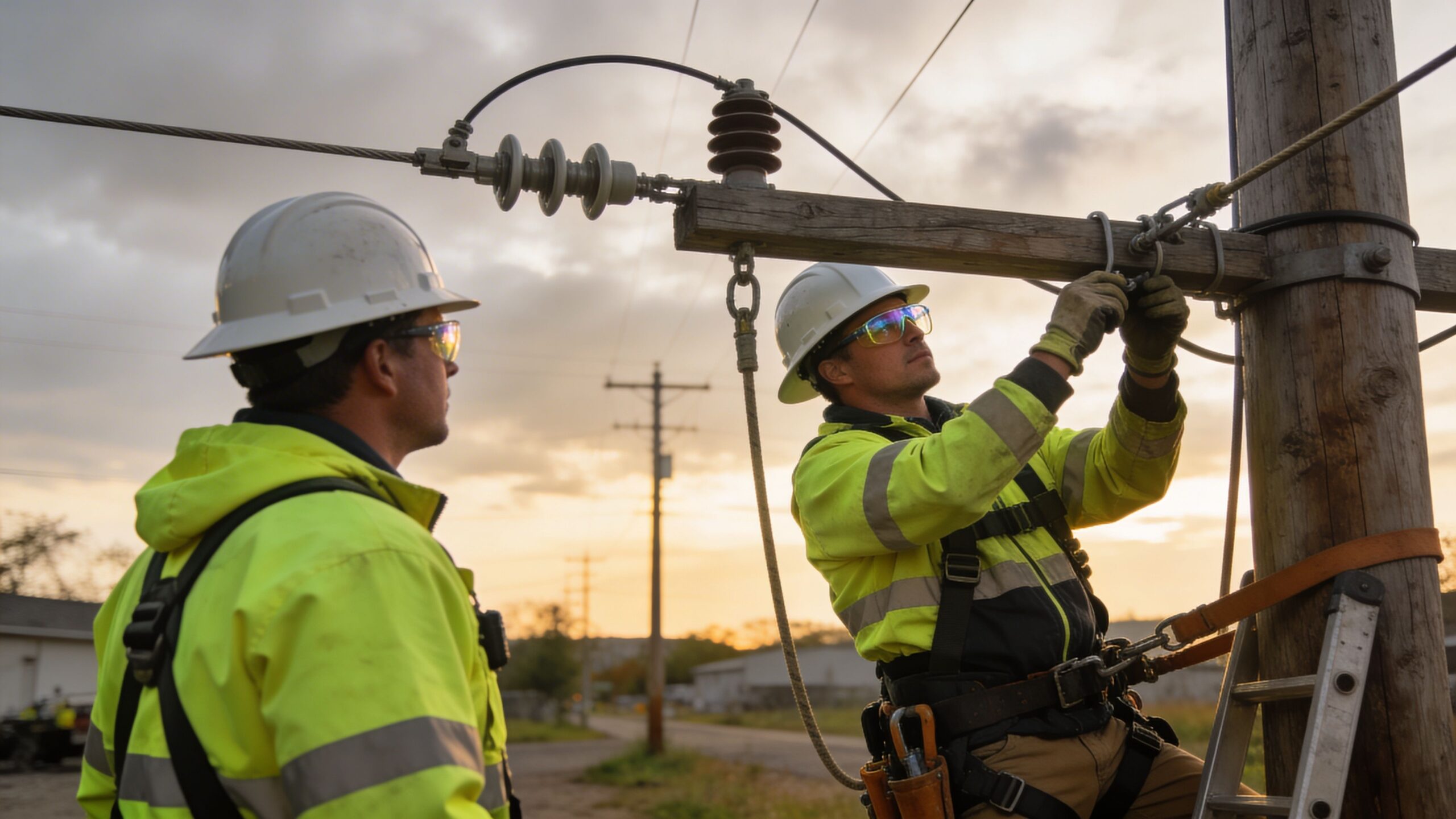
This work is hard on your body, hard on your schedule, and unforgiving if you get casual around safety. Indiana job postings make that plain. They call for proficiency with bucket trucks, power tools, ladders, signal level meters, voltmeters, and other test equipment, plus knowledge of separation and clearance rules and the physical ability to handle tools like 90-pound jack hammers, according to Indiana lineman job specifications on Indeed.
The body has to be part of the plan
You don’t need to be a bodybuilder. You do need to be physically useful.
That means being able to climb, bend, kneel, stand, sit in trucks, work overhead, and stay alert outdoors in noise, heat, cold, wind, and mud. A lot of turnover happens because people underestimate repetition. It’s not just one hard day. It’s hard days stacked together.
What wears beginners down
- Weather exposure: Rain, cold, heat, and wind aren’t occasional inconveniences. They’re part of the work.
- Awkward lifting: Material, tools, and setup tasks can tax you in ways gym training doesn’t.
- Height and positioning: A person can be comfortable on the ground and uneasy when working at height.
- Schedule disruption: Storm response, night work, and changing start times can hit family life hard.
Safety culture isn’t a slogan
On a good crew, safety isn’t performative. It’s procedural, repetitive, and essential.
People check gear. They inspect setup. They verify position. They maintain separation. They communicate before movement. They don’t freestyle around energized or potentially energized infrastructure.
That applies in utility and telecom environments alike. Even when the risk profile changes, the discipline doesn’t.
For candidates trying to understand what that standard looks like in practice, safety resources that focus on field operations and crew discipline can be useful. One example is Southern Tier Resources safety culture information, which reflects the kind of safety-first operating mindset serious field employers expect.
You can recover from being green. You usually can’t recover from being careless.
What the day looks like
Some days are smooth. Material is ready, access is clear, and the crew gets into rhythm early. Other days are a grind. Equipment shifts, weather changes, a test fails, a clearance issue appears, or restoration work turns a planned day into a long one.
That’s why mental steadiness matters as much as physical ability.
A crew needs people who can:
- Stay switched on: Fatigue can’t turn into sloppy judgment.
- Communicate clearly: Short, precise communication keeps people safe.
- Accept routine tasks: New hands spend time doing basic support work before they earn more responsibility.
- Respect process: The person trying to look fast too early becomes the person everybody watches nervously.
Who thrives anyway
For the right person, these demands aren’t a deal breaker. They’re part of the appeal.
The trade rewards people who like visible results, direct teamwork, practical problem-solving, and work that matters during outages, builds, and upgrades. If you need every day to feel easy, this won’t fit. If you want work that asks something from you and gives a true skill ladder in return, it can fit very well.
The smartest move is to decide with clear eyes. Not based on a social clip of a truck and a hard hat. Based on the true conditions, the true expectations, and whether you’re willing to meet them.
Build Your Telecom Career with Southern Tier Resources
A lot of Indiana newcomers get their first break in telecom, not power. They start as groundhands, laborers, or fiber helpers on crews doing broadband expansion, make-ready work, wireless upgrades, and support work around larger network builds. That path is not glamorous at the start, but it is real, and for plenty of people it is the fastest way to get field time, build habits, and prove they belong on a crew.
Telecom also gives green workers a clearer on-ramp than many utility roles. A contractor can teach tool handling, material staging, site discipline, and basic construction flow faster than they can fix a bad attitude or careless work. Hiring managers know that. They are often looking less for polished experience and more for signs that a candidate will show up, listen, work safely, and keep improving once the easy tasks turn repetitive.
That matters in Indiana because turnover is real. Some people like the idea of outdoor line work until they meet the schedule, weather, travel, and pressure that come with it. The ones who last usually accept the trade for what it is early. Long days happen. Entry-level work can be basic for a while. Respect is earned by being steady, useful, and safe before it is earned by climbing speed or technical range.
If your goal is telecom, the better question is not whether the work sounds exciting. It is whether you are willing to start where crews need help and build from there.
Quick answers to common questions
Do I need direct telecom experience to get started
No. Construction labor, directional drilling support, warehouse work, tree work, climbing background, equipment spotting, and other outdoor hands-on jobs can translate well. A candidate with safe habits and a coachable attitude is often more useful than someone trying to bluff field knowledge.
Will I have to travel
Possibly. Some crews stay local. Others move with the work across counties or spend stretches on projects away from home. Ask about territory, per diem, hotel arrangements, start times, and weekend expectations before you accept an offer.
What’s the most common rookie mistake
Trying to skip the apprentice stage in their head. Good beginners carry material, prep sites, manage tools, clean up, watch closely, and learn the pace of the crew. That is how they get trusted with more.
Is utility better than telecom
They are different lanes. Utility work often follows a more defined apprenticeship track. Telecom can offer quicker entry and broader exposure to fiber, wireless, and network construction. The right choice depends on whether you want the fastest way into field work or a more traditional utility progression.
Southern Tier Resources works with carriers, ISPs, data center operators, and wireless partners that need skilled crews for fiber, wireless, and infrastructure projects. For someone trying to break in, that matters. Companies in this part of the industry often need people who are ready to start at the bottom, take direction, and grow into more technical responsibilities over time. If you want a telecom-focused field career with a company that values safety, execution, and real network construction work, explore opportunities at Southern Tier Resources.