Michigan’s registered apprenticeship system reached 20,600 active apprentices in 2024, with 8,400 new apprentices added statewide, according to the Michigan registered apprenticeship report. For anyone comparing lineman schools in Michigan, that number confirms you are entering a high-demand field tied to grid reliability, utility maintenance, broadband buildout, and storm restoration.
That demand creates options, and not all options serve the same goal.
Some Michigan programs are best treated as college-based pre-apprenticeship routes that build climbing skill, safety habits, and CDL readiness before you apply to utilities or contractors. Others are utility-directed training paths built to feed a specific employer. The strongest earn-while-you-learn route is a formal registered apprenticeship, where the employer relationship matters more than the school name.
Choose based on the outcome you want. If your goal is the fastest path into utility linework, put employer-connected programs at the top of your list and do not get distracted by schools with weak placement visibility. If you want broader exposure to overhead, underground, and related utility systems before you commit, a college program can be the better bet. If you already know you want apprenticeship, start with the employers and training organizations that control hiring, then work backward to the training they prefer.
This guide is built around those categories instead of throwing every program into one bucket. That matters for students trying to avoid wasted tuition, and it matters for employers that need candidates who can show up prepared.
Employers should use this list the same way. Recruit from schools and pre-apprenticeship programs that already test climbing ability, physical readiness, safety discipline, and CDL progress. Companies that wait until graduation miss the best candidates. Companies that build relationships with these programs hire earlier, reduce washout, and shorten the path to field productivity.
Some programs are strongest for first-time entrants. Some are best for utility-focused candidates. Some only make sense if you already have a target employer in mind.
1. Alpena Community College – Utility Technology
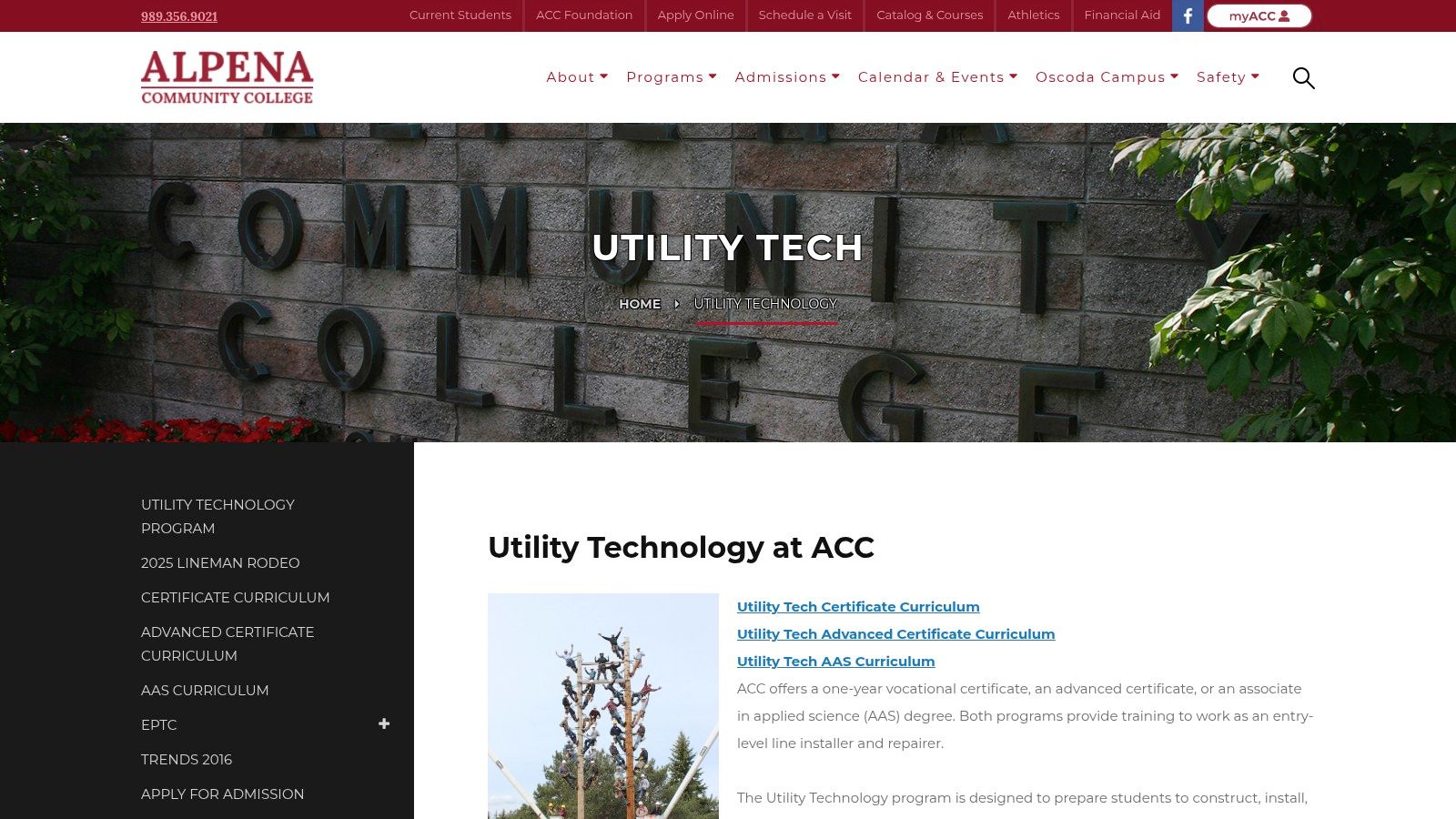
Alpena Community College Utility Technology is a college pre-apprenticeship option for students who want more than a basic climb course. It gives you broad exposure to electric distribution, in addition to telephone and CATV systems. That wider scope matters if you want multiple entry points into utility and communications field work instead of betting on one narrow track.
The main advantage is simple. Alpena puts you on equipment, in the yard, and on poles early. That is the right approach. A lineworker program should test whether you can handle heights, repetition, weather, and physical strain before you spend more time and money.
Who should choose Alpena
Choose Alpena if you want broad field preparation before you pursue utility hiring or a formal apprenticeship.
It fits students who want:
- More than electric-only exposure: You train across overhead and underground distribution, with added telecom and CATV basics.
- A true skills-first environment: The program emphasizes climbing, equipment handling, and field tasks, not just classroom instruction.
- Flexibility in job targeting: Alpena makes sense if you are still deciding between utility contractors, telecom infrastructure work, or employer-specific apprenticeship paths.
If your long-term target is utility linework, use Alpena as a launchpad, then study what high-voltage utility work demands before you commit to your next step.
Trade-offs you need to accept
Alpena is a better fit for students who want exposure across utility disciplines than for students who already have a locked-in employer sponsorship. If you already know the exact utility or apprenticeship program you want, an employer-direct path may get you there faster.
It also expects physical commitment early. Heights matter. Outdoor work matters. Safety discipline matters. Students who want a light introductory experience should skip this one.
For employers, Alpena deserves attention because it can produce candidates with wider pole-line familiarity than a narrow pre-hire course. That is useful for utilities, contractors, and infrastructure employers that need entry-level workers who already understand climbing expectations, field safety, and mixed utility environments.
2. Lansing Community College – Electrical Utility/Lineworker
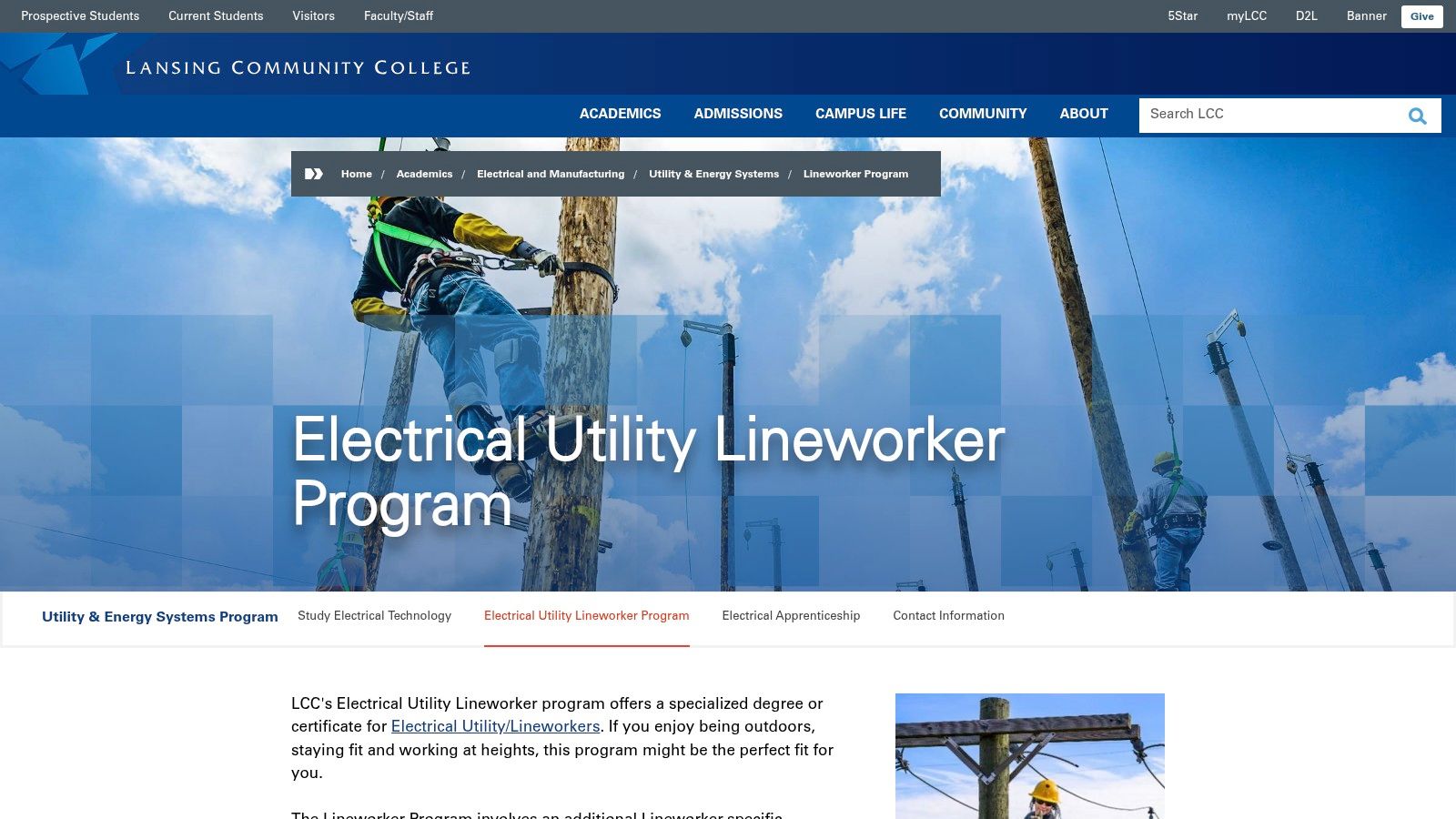
Lansing Community College Lineworker Program is one of the most utility-aligned college pathways in the state. It is popular for a reason. Lansing and Alpena rank as the top two most popular Michigan institutions for lineworker majors, which tells you where student demand is concentrating (College Factual Michigan lineworker rankings).
Lansing’s structure is practical and disciplined. The program runs as an intensive path that typically spans over a year, including an orientation, academic semesters, and a climbing school with strong employer reviews. That format works well for students who want a defined runway instead of piecing together separate classes.
Best use case
Choose Lansing if you want a college route that behaves like a feeder system into utility standards.
The program stands out for:
- Utility-connected training: Some climbing components run through Consumers Energy facilities.
- Strong equipment mix: Indoor climbing, underground splicing stations, and utility-spec setups matter.
- Cohort structure: You move with a defined group, which keeps standards tighter.
Lansing is a strong fit for future utility applicants, but also for contractors that need entry-level workers who have already trained around utility expectations. Teams doing pole line work, make-ready, and outside plant construction can benefit from that foundation. If you are coming from broadband or telecom construction, review high-voltage field support context so you understand where utility lineworker preparation overlaps with adjacent infrastructure work.
Where students get this wrong
Some applicants treat Lansing like a guaranteed utility hire. It is not. The pre-apprenticeship helps. It does not remove competition.
Also, do not overlook added costs. PPE, CDL work, and travel to external training centers can raise the true price beyond tuition. In the statewide roundup, Lansing Community College is listed at $4,890 in one Michigan-specific listing, while another Michigan overview notes the lineworker program’s intensive structure and employer reviews rather than repeating cost. Use the school site for current program details and budget for gear either way.
3. Northern Michigan University + Midwest Skills Development Center – Electrical Line Technician
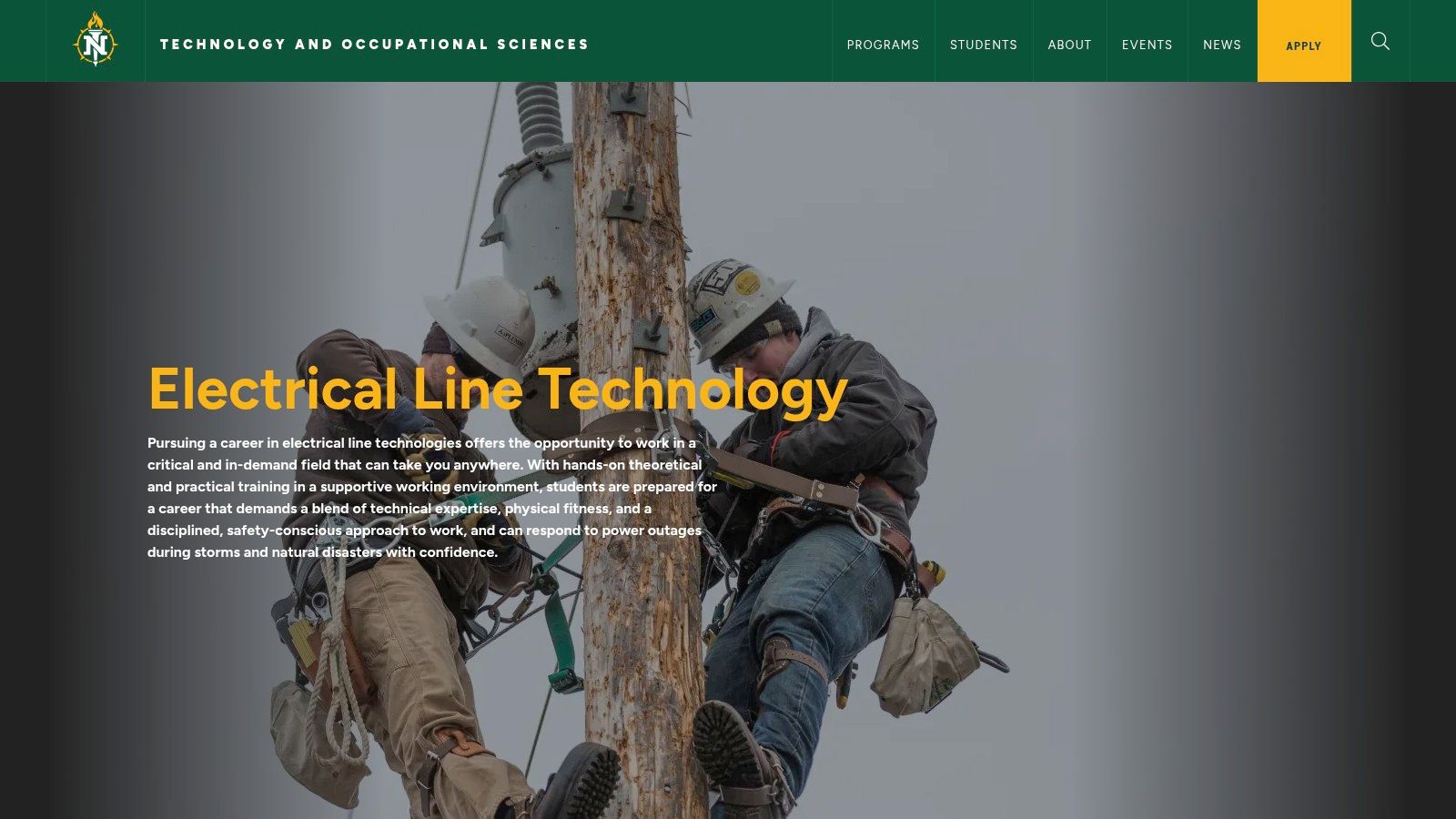
Northern Michigan University Electrical Line Technician is the best option on this list for students who want an intensive one-year style experience in a purpose-built training environment. The partnership with the Midwest Skills Development Center gives the program a serious field-prep feel.
This is not the place for someone who wants to ease into the trade. It is for candidates who want to train hard, learn climbing and line fundamentals fast, and move toward entry-level utility work with a recognized credential.
Why NMU stands out
The biggest advantage is employer connection. Northern Michigan University reports on-site company recruiting for post-graduation employment in the broader Michigan lineman overview, which is what students should look for in lineman schools in michigan. Recruiters on site beat vague promises every time.
Another useful signal is cost. North Michigan University is listed at $2,800 in the same statewide roundup of lineman programs, making it one of the lower-cost named options in that source.
A few strengths matter here:
- Utility yard realism: Pole yard scenarios are closer to real field conditions than lecture-heavy programs.
- Focused duration: The one-year style format helps students get in and move forward.
- Regional network: Upper Peninsula employer ties are a real advantage if you want to work there.
Practical trade-off
The location can be a problem for downstate students. Housing, travel, and weather are not small issues. If you are local or willing to relocate temporarily, NMU becomes more attractive.
The school is also one of the stronger recruiting choices for employers in northern Michigan and the U.P. If you need line-tech talent that already understands the regional operating environment, this program deserves a direct recruiting relationship.
4. Grand Rapids Community College – Pre-Lineworker Training
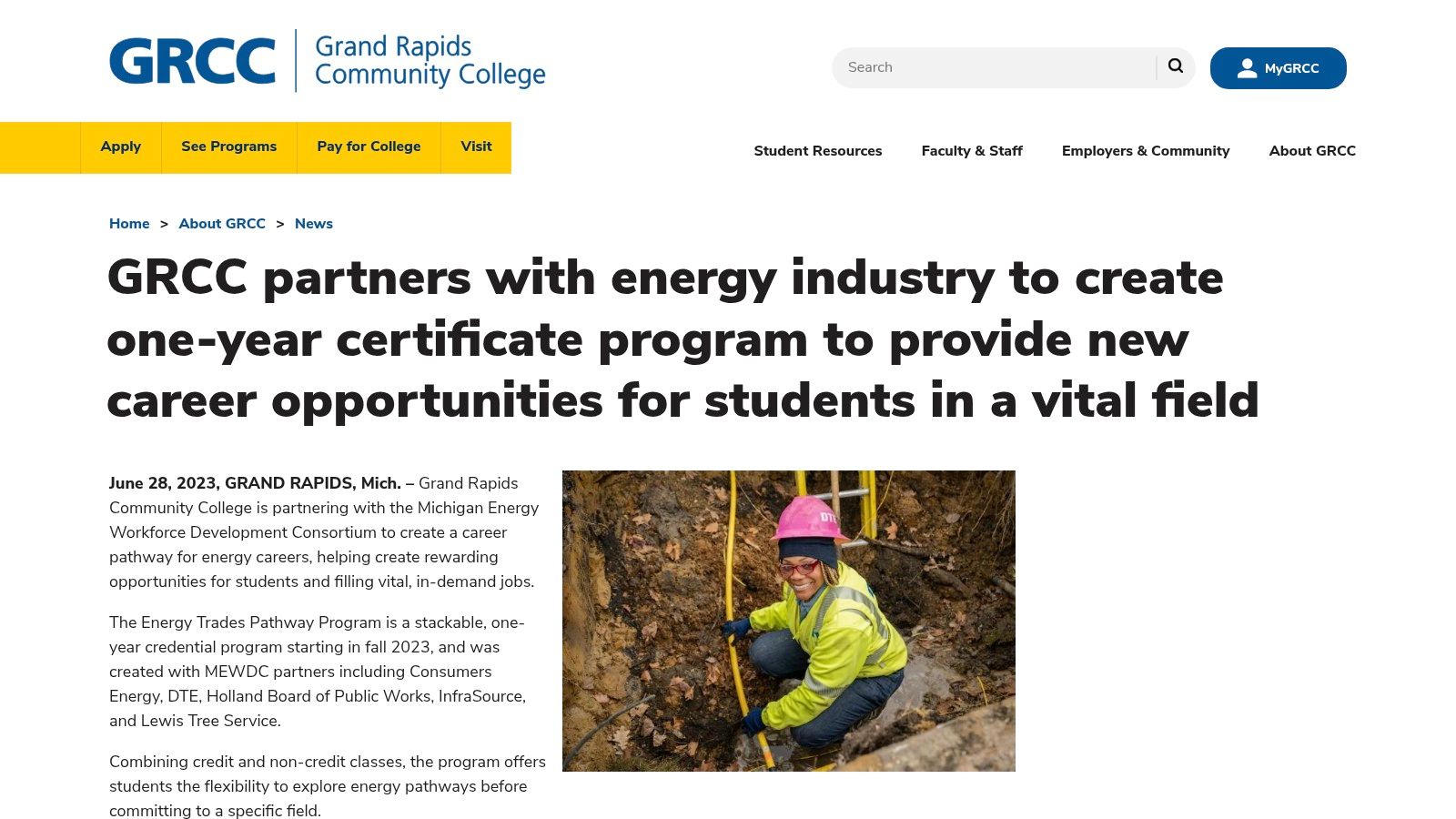
Grand Rapids Community College Pre-Lineworker Training fills an important gap in West Michigan. It gives local students a college-based pre-apprenticeship option instead of forcing them into a utility-direct track or a long relocation before they have even proven they want linework.
That distinction matters. In this guide, GRCC fits the college pre-apprenticeship category. It is best for students who want structured preparation, local access, and a clear shot at the next step. It is not the right choice for anyone expecting direct journeyman status or guaranteed placement.
Who should choose GRCC
Pick GRCC if staying in West Michigan improves your odds of finishing training, keeping costs under control, and showing up ready for the next hiring process. Convenience is not a minor detail in the trades. Students drop out for practical reasons all the time, including commuting, housing, schedule conflicts, and poor planning.
This program makes the most sense for:
- West Michigan residents who want training close to home
- Entry-level candidates who need safety, electrical basics, and physical preparation
- Students comparing categories of programs and deciding whether a college pre-apprenticeship fits better than a utility-run program or formal apprenticeship
Key Advantage
GRCC gives you a clean starting point. That is useful if you need a structured environment before you test for utility roles, contractor jobs, or a formal apprenticeship.
The trade-off is just as clear. A pre-lineworker program helps you compete. It does not finish your career path for you. You still need to chase the next credential, employer, or apprenticeship opening with discipline.
Ask hard questions before you enroll:
- Who is hiring graduates?
- What physical standards are enforced during training?
- How much climbing, field exposure, and hands-on work do you get?
- Which employers in West Michigan actively recruit from the program?
If a school cannot answer those questions clearly, treat that as a warning.
For employers, GRCC is worth attention because it sits in a strong labor pocket. Contractors, utilities, co-ops, and telecom field employers in West Michigan can use this program as an early recruiting channel for candidates who already understand safety expectations and outdoor work realities. That is the practical value of a college pre-apprenticeship. It gives employers a local feeder system, not just a name on a resume.
5. Mott Community College – Consumers Energy Electric Lineworker Pre-Apprenticeship
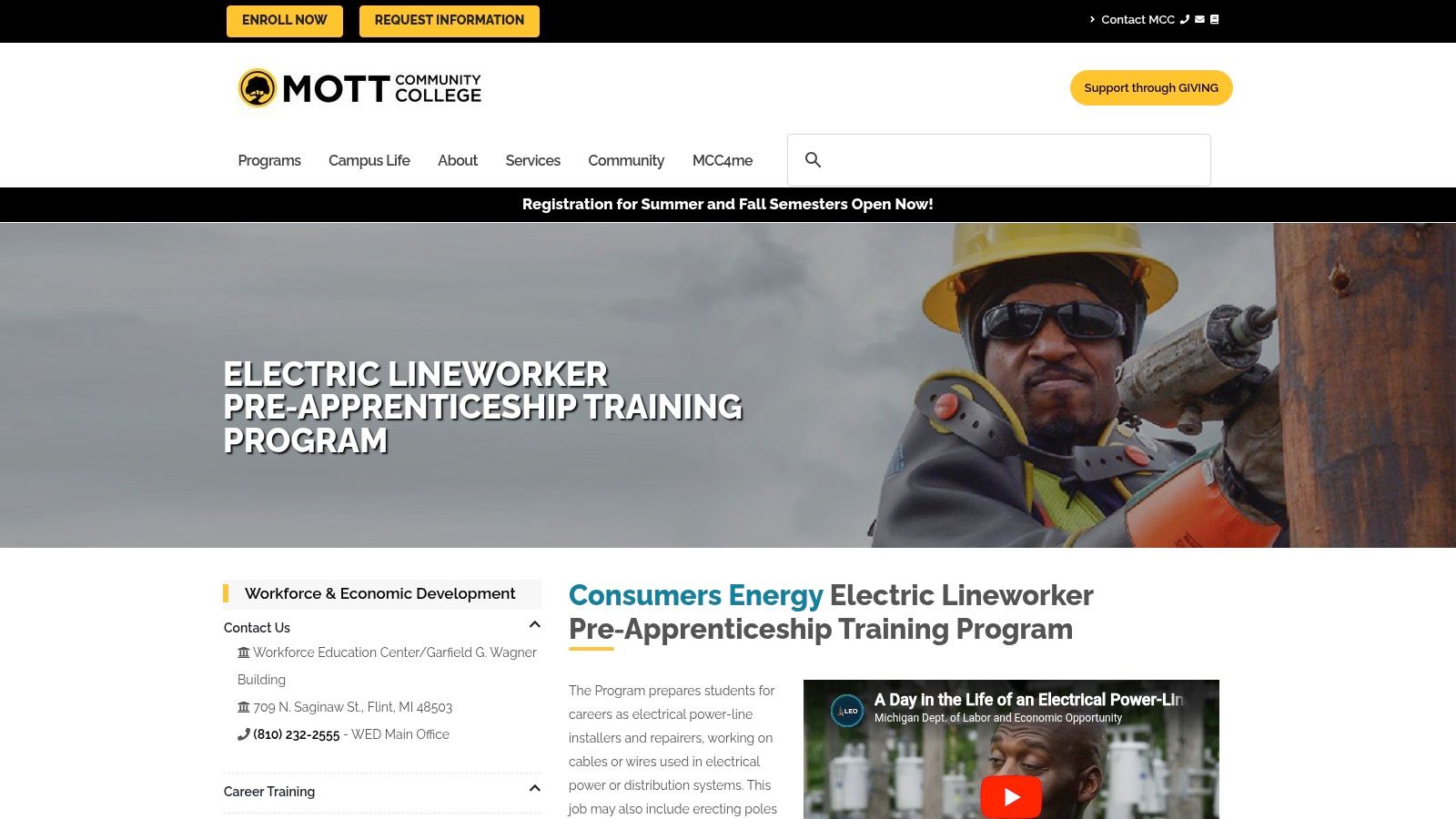
Mott Community College Lineworker Pre-Apprenticeship is not trying to be everything. That is why it works. It is a workforce-focused, noncredit pre-apprenticeship aligned to Consumers Energy’s standards.
If Consumers Energy is your target, Mott deserves a hard look. If you want a broader college credential first, look elsewhere.
Best for utility-focused applicants
This program is built around three things that matter at the front end of lineworker screening: safety, basic electricity, and physical readiness. That is the right emphasis. Most washout happens because applicants underestimate the physical standard or overestimate how much theory can substitute for hands-on readiness.
The program is a good choice for:
- Consumers Energy applicants: The alignment is the main draw.
- Career changers: Noncredit workforce programs can move faster than full academic tracks.
- Students who need advising: Workforce office support can help if you need structure.
The blunt downside
Noncredit means noncredit. You are not earning a journeyman credential here, and you are not building a traditional academic transcript the way you would in a degree or certificate pathway.
That is not automatically bad. It just means you should only choose Mott if the utility-aligned screening route is what you want.
For employers, especially large utilities and contractors with specific selection criteria, Mott-type programs are useful because they narrow the pool to candidates who have already bought into the physical and behavioral expectations of the trade.
6. Jackson College – EMPOWER Lineworker Pre-Apprenticeship
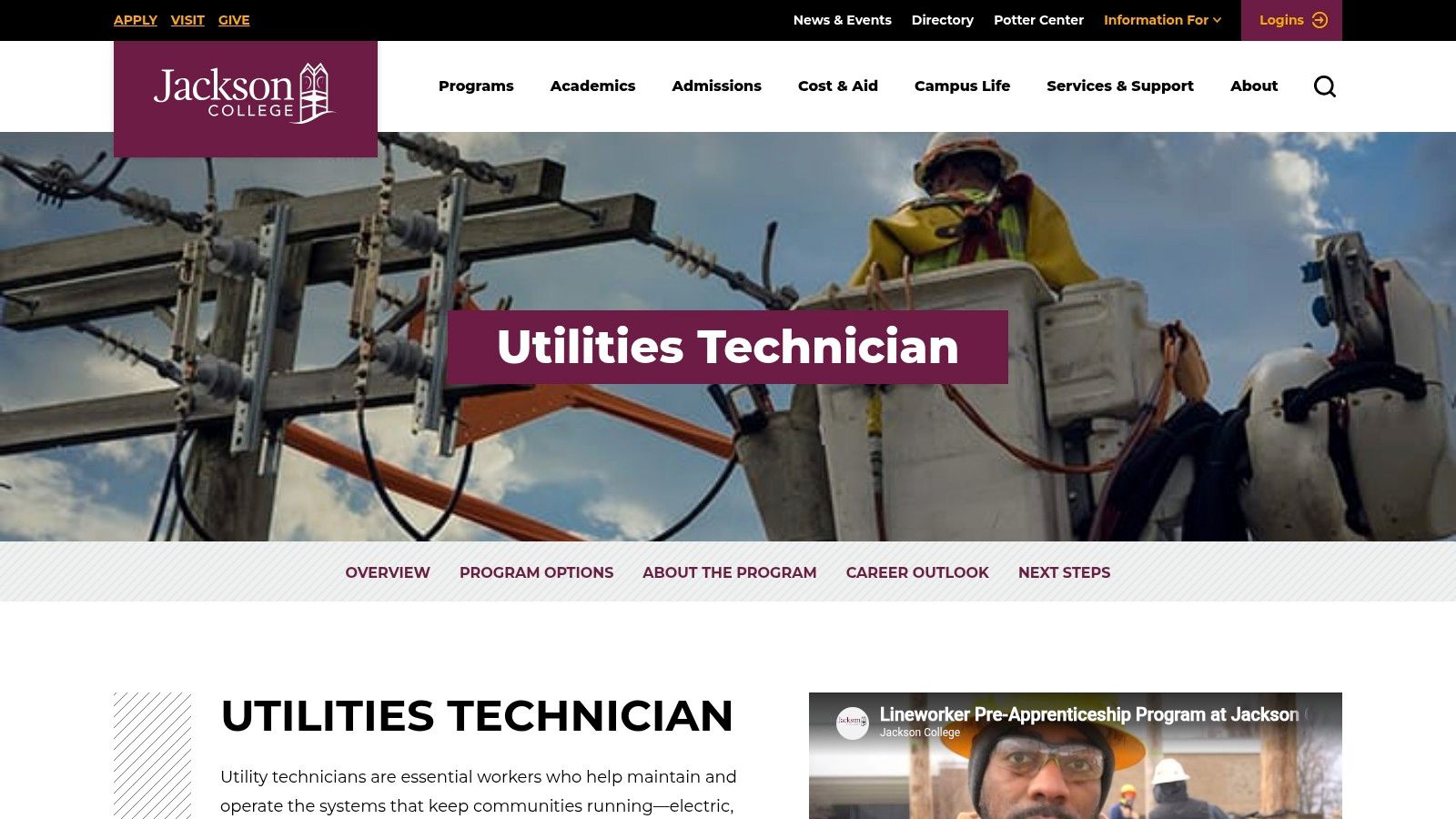
Jackson College EMPOWER Lineworker Pre-Apprenticeship is the cleanest option for students who want transparent structure. Some programs tell you the end goal and leave the middle fuzzy. Jackson is stronger on showing the pathway.
It is also one of the named Michigan programs with a listed tuition of $4,140 in the statewide lineman overview. That gives prospective students a concrete starting point when comparing costs across lineman schools in michigan.
Why Jackson is a practical choice
The EMPOWER pathway works for people who want to see requirements, course maps, and progression in writing. That is useful in a trade where many applicants waste time because they do not fully understand the sequence from pre-apprenticeship to climb school to employer selection.
Jackson makes sense for:
- Students who want documented entry requirements
- Applicants targeting Consumers Energy-related pathways
- People who value stackable credits over one-off workforce classes
The location is another plus. Proximity to utility hubs helps with networking, screening, and employer visibility. In linework, convenience is not a small issue. Closer access to training and employer touchpoints means better follow-through.
Where it fits in the bigger Michigan market
Jackson is not the cheapest option listed, and it is not the most broad-based. It sits in the middle. That is its strength. It gives students enough structure to move forward without forcing them into a single narrow route too early.
For employers, Jackson is a useful partner program if you want candidates who have followed a formal pre-apprenticeship process and can speak clearly about safety, readiness, and next-step commitment.
7. Henry Ford College – Power and Trades Pathways: Electrical Transmission & Distribution Technology
Henry Ford College Power and Trades Pathways is the strongest Southeast Michigan option on this list for students who want a Detroit-area route into transmission and distribution field work.
Its appeal is not hype. It is geography, stackable credit, and a curriculum pointed toward overhead and underground distribution, substations, and metering. If you live in or near Detroit and do not want to relocate, Henry Ford College deserves to be high on your list.
Why Detroit-area students should pay attention
Henry Ford College is listed at $3,020 in the Michigan lineman program roundup, which puts it below Alpena and Jackson on listed cost in that source. For students weighing trade-offs between affordability and access, that matters.
A few reasons to choose it:
- Regional convenience: Southeast Michigan applicants can stay close to home.
- T and D focus: The curriculum is pointed toward actual field roles in power systems.
- Stackable academics: College-credit structure helps if you want to keep building credentials.
The right expectation
This is still a pre-apprenticeship style move, not a guaranteed seat in a utility apprenticeship. You need to treat it as preparation, not entitlement.
That said, Henry Ford can be a smart move for applicants who want a college-backed route with advising support and a realistic next step into utility hiring channels. Employers in Southeast Michigan should pay attention for the same reason. Regional recruiting works better when students do not have to leave the market to get trained.
8. Consumers Energy – Electric Lineworker Pre-Apprenticeship + 11-Week Climb School
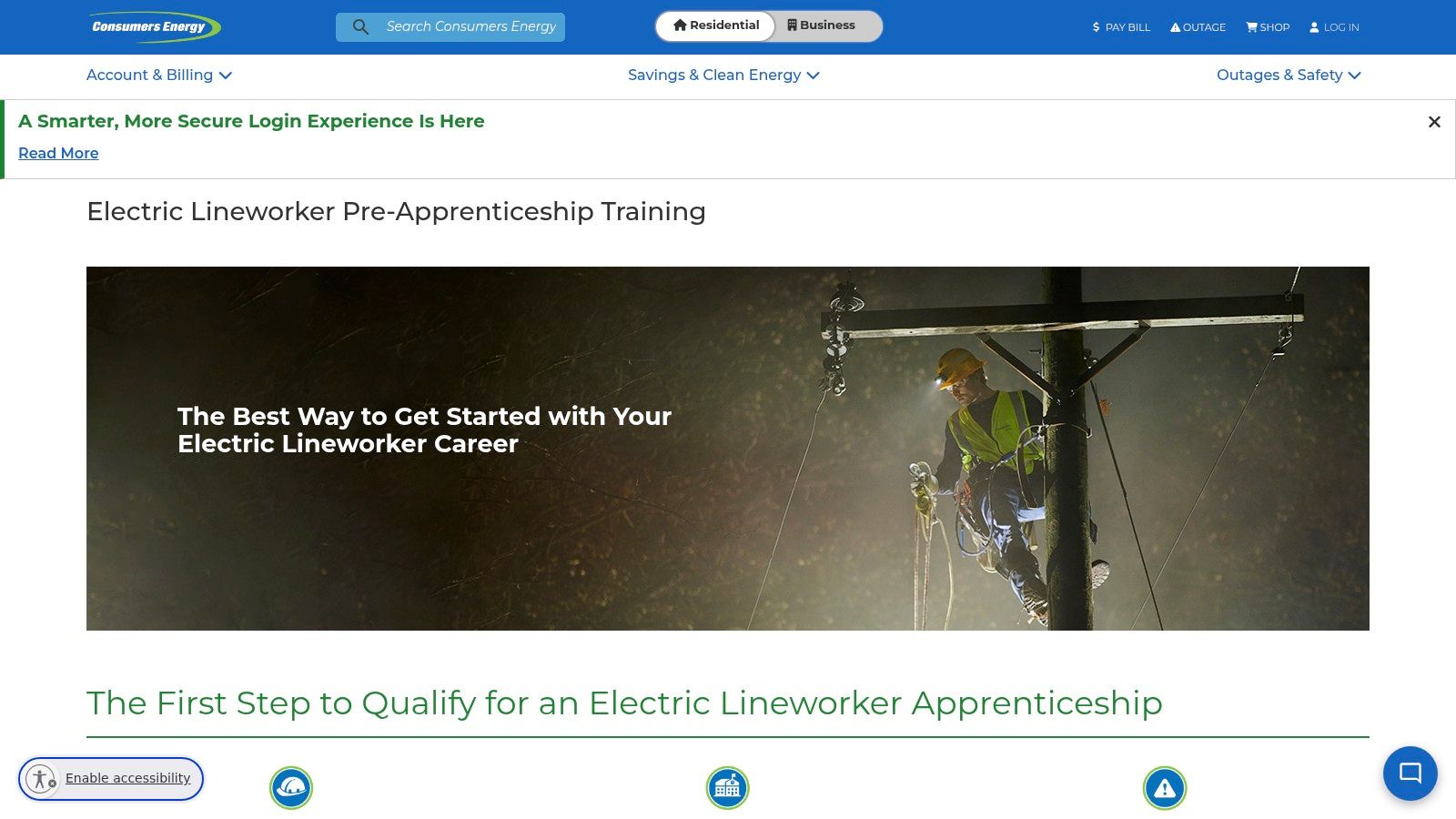
A utility-direct path beats a generic pre-apprenticeship if your goal is a utility job. Consumers Energy school-to-work programs give Michigan students one of the clearest examples of that model.
This is not the same as enrolling in a community college program and hoping employers notice. Consumers ties training to its own hiring standards. That makes this option more focused, more selective, and more useful for students who already know they want utility distribution work.
Why this program stands out
Consumers sits in a different category than the college-led options above. It belongs in the employer-direct lane.
That distinction matters. If you can get into a partner-college pre-apprenticeship and advance into the 11-week climb school, you are training inside a pipeline built around actual utility expectations. For the right candidate, that is a better bet than collecting credits without a clear employer target.
Choose this route if you want:
- A direct line to utility-style training
- Selection standards that mirror real hiring gates
- A clearer sequence from school to climb training to apprenticeship consideration
What students need to understand before applying
Treat this as an audition, not a reward for showing up.
Consumers does not owe anyone a seat, and completing the early stage does not guarantee the next one. You need the work habits, physical readiness, coachability, and safety mindset to keep advancing. If you want a softer entry point with more room to build skills first, a college pre-apprenticeship may fit better. If you want the strongest employer alignment on this list, this is the better choice.
As noted earlier, lineworker pay and long-term demand in Michigan are strong enough to justify the competition. That is the upside. The trade-off is simple. This path asks more from you up front.
Employers should study this model closely. Visible school-to-work sequencing, employer-defined standards, and early skills screening produce better hires than vague recruiting campaigns. Companies trying to staff crews can also monitor Michigan lineworker and utility field openings to benchmark demand and tighten their recruiting partnerships with schools.
9. Joint Michigan Apprentice Program (JMAP) – Statewide Utility Lineworker Apprenticeship
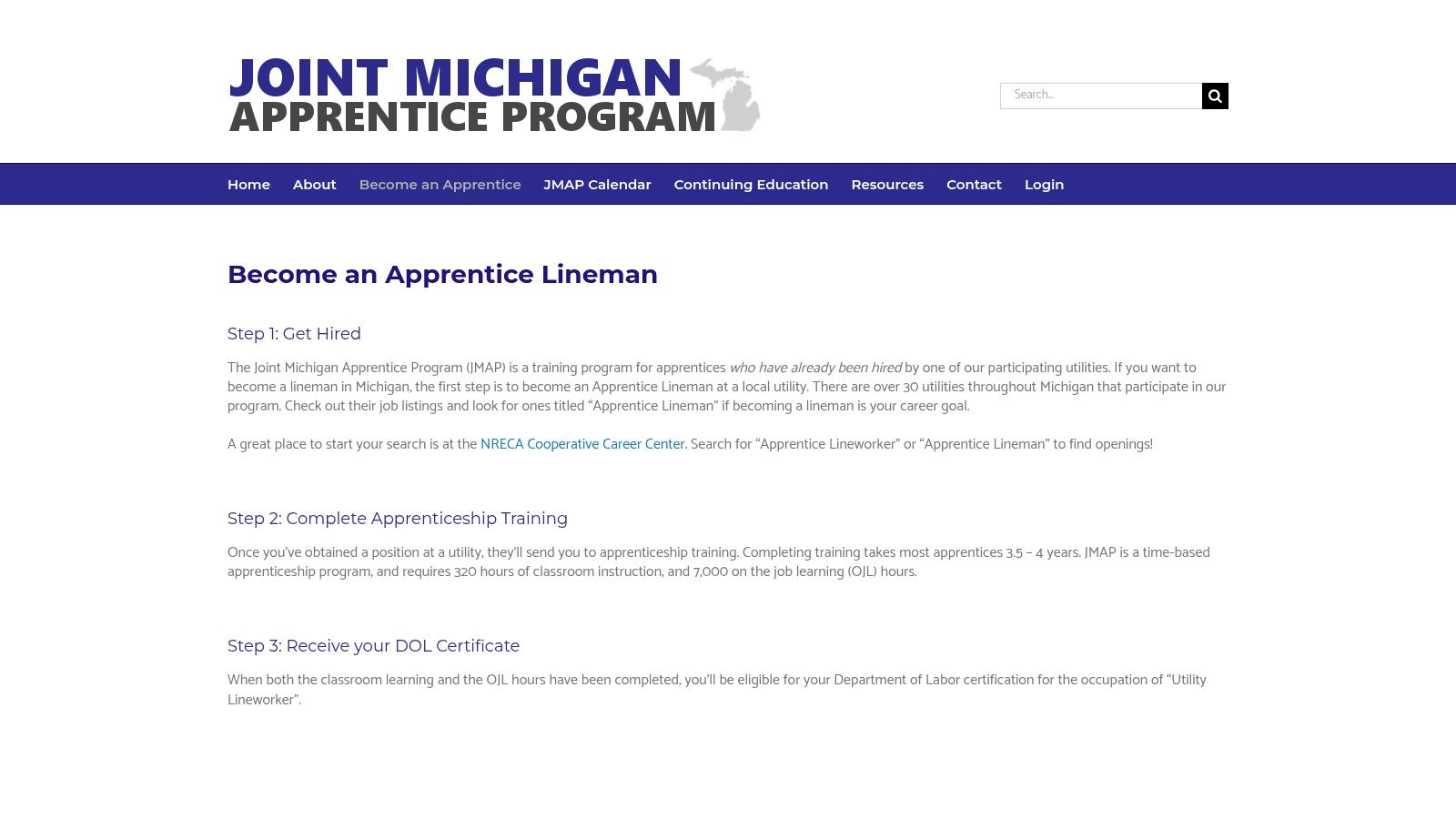
Apprenticeship remains one of the strongest workforce models in the skilled trades because it ties training to a real employer, real wages, and a defined advancement path. That is why Joint Michigan Apprentice Program entry information deserves serious attention from both applicants and hiring managers.
JMAP sits in a different category than the college pre-apprenticeship programs on this list. It is a formal apprenticeship route. You do not pay first and hope an employer notices you later. You get in through a participating employer and train inside a registered system that combines classroom instruction with supervised field experience.
For the right candidate, this is the better option.
Why JMAP stands out
JMAP works best for people who already know they want linework and are ready to compete for a sponsored spot. It puts career outcomes first. You earn while you train, build hours that matter, and develop under utility and union standards instead of trying to stitch together the next step on your own.
That trade-off is clear. Entry is tighter, but the path is cleaner.
If you are comparing program types across Michigan, put JMAP in the formal apprenticeship bucket and judge it that way. Do not compare it to a campus program as if they serve the same purpose. College pre-apprenticeships help you get ready. JMAP is the job-connected training structure many students are trying to reach.
Who should pursue JMAP
Go after JMAP if you fit one of these profiles:
- You can compete for employer-sponsored openings
- You want wages, benefits, and structured progression from day one
- You prefer a formal apprenticeship over a tuition-first training gamble
- You are ready for union and utility expectations on attendance, safety, and work quality
Students should also watch the hiring side of the market, not just school options. Tracking Michigan utility and lineworker job openings helps you see which employers are actively building crews and where a formal apprenticeship path is more realistic.
What employers should take from this model
JMAP is a recruiting framework, not just a training label. Employers that partner with formal apprenticeship systems get a more disciplined pipeline, clearer skill progression, and better visibility into how workers are developed over time.
That matters if you are trying to reduce bad hires.
If you are an employer, use JMAP when you need long-term lineworker development with standards that hold up in the field. If you only need a wider top-of-funnel candidate pool, a college pre-apprenticeship partnership may fit better. If you need workers who can grow inside your system and stay, formal apprenticeship is the stronger bet. You cannot treat JMAP like open enrollment. You need a participating employer, and that makes your hiring strategy part of your training strategy.
Take the process seriously. Get your CDL plan in order, show up prepared, and act like every screen is part of the apprenticeship. In a statewide guide like this one, that is what separates the formal apprenticeship route from the school-first options.
10. Char-Em ISD Lineworker Training Academy – Energy Fundamentals: Lineworker Emphasis
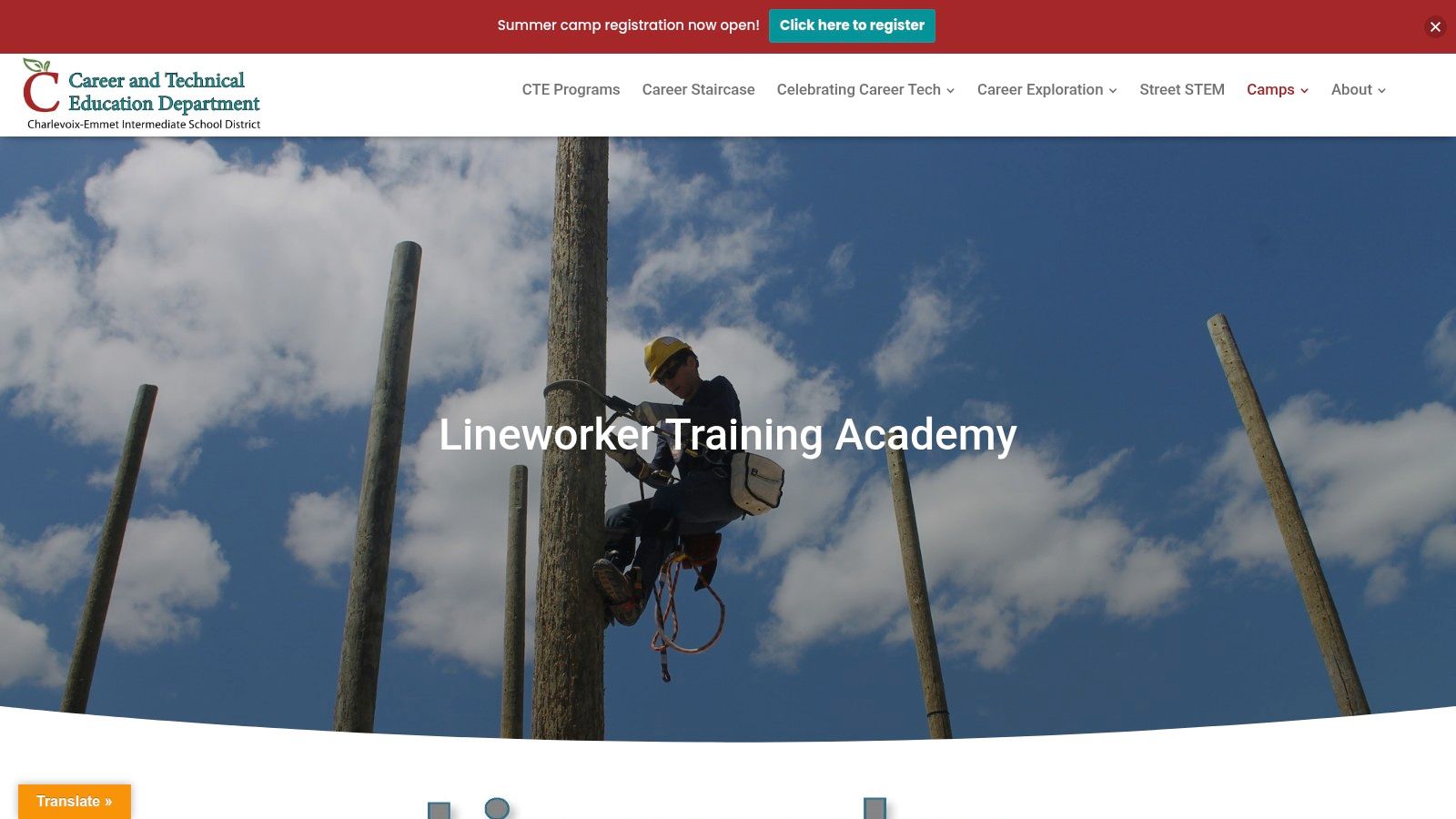
Char-Em ISD Lineworker Training Academy is not for adults trying to switch careers. It is for high school juniors and seniors who want an early on-ramp into linework.
That makes it unique on this list. It gives younger students exposure to classroom learning, training-yard experience, and employer contact before they have to choose a college pre-apprenticeship or direct screening path.
Why early-start programs matter
Linework is easier to enter when students understand the physical reality early. Some discover they love the outdoor environment and team structure. Others realize they do not want heights, weather exposure, or heavy field conditions. Finding that out before paying college tuition is smart.
This academy is a strong fit because it offers:
- Early field exposure
- Industry guest instruction
- Direct visibility into next-step options after graduation
For local employers, these high-school pipelines are worth supporting. They build awareness before the labor market gets crowded by competing trades, and they help students connect linework to broader infrastructure careers, including utility support and deployed field services across network builds.
Who should skip it
Anyone outside the regional high school audience should move on. This is not an adult-entry shortcut.
Still, for the students it serves, it is a strong head start. The best lineworker candidates know early that they want practical work, not a four-year office track.
Michigan Lineman Schools: Side-by-Side Comparison
| Program | Core Focus & Duration | Training Quality ★ | Value / Cost 💰 | Target Audience 👥 | Unique Selling Points ✨🏆 |
|---|---|---|---|---|---|
| Alpena Community College – Utility Technology | Hands-on pole/top & underground; telecom basics; regional hiring ties | ★★★★ | 💰 Moderate, tuition + gear/CDL | 👥 Students seeking broad electric + comms exposure | ✨ Early 40-ft pole climb; utility-grade equipment; strong MI utility pipeline |
| Lansing Community College – Electrical Utility/Lineworker | AAS & certificate; cohort model; climb training at Consumers sites | ★★★★ | 💰 Moderate, college costs; employer-aligned opportunities | 👥 Candidates wanting college → employer pathway | ✨ Cohort intake; access to Consumers Energy training facilities |
| Northern Michigan University + Midwest Skills Dev. Ctr – Electrical Line Tech | One-year intensive with purpose-built pole yard & NMU credential | ★★★★ | 💰 Moderate-Higher, tuition + housing/logistics | 👥 Students targeting entry-level UP/statewide utility jobs | ✨ Heavy hands-on yard training; strong regional employer links |
| Grand Rapids Community College – Pre-Lineworker | One-year MEWDC pre-apprenticeship embedded in Energy Trades | ★★★★ | 💰 Low-Moderate, community college; materials extra | 👥 West Michigan candidates seeking utility readiness | ✨ MEWDC partnership; pathway to climb schools and utility testing |
| Mott Community College – Consumers Energy Pre-Apprenticeship | Noncredit workforce program aligned to Consumers Energy standards | ★★★ | 💰 Low, noncredit; seat limits | 👥 Applicants targeting Consumers Energy climb school | ✨ Direct alignment to Consumers selection; workforce advising |
| Jackson College – EMPOWER Lineworker Pre-Apprenticeship | Structured EMPOWER tracks with stackable credits & clear maps | ★★★★ | 💰 Moderate, stackable credits; PPE costs | 👥 Applicants wanting transparent entry & proximity to hubs | ✨ Stackable certificates; clear course handbook & pathways |
| Henry Ford College – Electrical T&D Technology | Pre-apprenticeship for overhead/underground, substations & metering | ★★★★ | 💰 Moderate, college credit that stacks; gear costs | 👥 Southeast Michigan candidates pursuing T&D roles | ✨ Substation/metering focus; advising into apprenticeships |
| Consumers Energy – Pre-Apprenticeship + 11-Week Climb School | Partner college pre-apprentice → 11-week climb → paid apprenticeship | ★★★★★ | 💰 High value, paid apprenticeship; very competitive entry | 👥 Candidates aiming at a major utility hiring pipeline | ✨🏆 Direct employer pipeline; training on field equipment; paid OJT |
| Joint Michigan Apprentice Program (JMAP) – Apprenticeship | Registered, employer-sponsored earn-while-you-learn apprenticeship with substantial classroom and on-the-job training hours | ★★★★★ | 💰 Excellent, no tuition once hired; wages & benefits | 👥 Applicants hired by participating co-ops/municipals | ✨🏆 DOL-recognized journeyman pathway; statewide standardized curriculum |
| Char-Em ISD Lineworker Training Academy – Energy Fundamentals: Lineworker Emphasis | CTE pre-apprenticeship for HS juniors/seniors with training-yard exposure | ★★★ | 💰 Low, no college tuition for participating students | 👥 High-school students in the region | ✨ Early industry exposure; equipment access with local utilities |
Final Thoughts
Michigan does not have one best path into linework. It has three: College pre-apprenticeship, utility-direct training, and formal apprenticeship. Each serves a different purpose, and students who ignore that waste time or money.
Start by matching the program to the job you want.
If you want broad trade exposure and a wider set of entry options, pick a college pre-apprenticeship such as Alpena, Grand Rapids, Henry Ford, or NMU. These programs make sense for students who still need skill development, climbing reps, CDL planning, and a cleaner runway into applications. If you want utility hiring alignment, Lansing, Mott, Jackson, and the Consumers Energy pathway are the better bets. If you already have an employer path available through a co-op or municipal utility, JMAP is the strongest long-term move because you are earning, training, and progressing in a registered system from day one.
That distinction matters for employers too.
A contractor, utility, co-op, or infrastructure firm should not recruit every school the same way. College pre-apprenticeship programs are your volume pipeline. Utility-direct programs are your fit pipeline. Registered apprenticeships are your retention pipeline. Use all three categories if you want a steadier bench and fewer bad hires.
Students should filter every program through four blunt questions: How much real climbing and yard time do you get? Which employers show up and hire from the program? What happens immediately after completion? Does the school help you line up CDL steps, physical prep, and application timing? Skip the polished sales pitch. Get those answers first.
Career outcomes should drive the decision, not sticker price alone. Cheap training is a bad deal if it leaves you with weak field reps and no hiring path. Expensive training is also a bad deal if you are not physically prepared, do not have a CDL plan, or are chasing a utility job through a program with no utility relationships.
As noted earlier, Michigan offers solid demand and good earning potential for lineworkers. That makes program selection more important, not less. The right school gets you into the trade faster. The wrong one delays your first real job.
My recommendations are simple.
Choose Alpena if you want broad foundational training. Choose Lansing if you want the clearest college route tied closely to utility work. Choose NMU if you want a northern option with focused line training. Choose Henry Ford if you want a practical Southeast Michigan path with transmission and distribution exposure. Choose Mott, Jackson, or the direct Consumers route if Consumers Energy is the target. If you can enter JMAP through a participating employer, treat that as a top-tier opportunity.
For employers, the play is just as clear. Build relationships with instructors before graduation season. Visit yards. Offer equipment demos, mock interviews, and site tours. Help schools screen for the habits that matter in the field: attendance, coachability, physical readiness, safety discipline, and comfort outdoors in bad conditions. That is how you recruit people who can stay, progress, and produce.
Southern Tier Resources supports the same kind of field-critical infrastructure work that lineman training feeds into. If your team needs a dependable partner for fiber deployment, make-ready construction, wireless builds, data center infrastructure, or ongoing network network maintenance, talk with Southern Tier Resources. They bring practical execution, safety-first crews, and end-to-end delivery that carriers, ISPs, utilities, and network operators can use.