You’re probably in one of three spots right now. You’re either looking at job boards and seeing apprentice lineman jobs in illinois with almost no real detail, you’ve heard union hall advice from five different people and none of it matches, or you’re trying to figure out whether this trade fits you before you spend time and money on a CDL.
That confusion is normal. The listings usually tell you just enough to apply and not enough to understand the path. In Illinois, that gap is especially frustrating because the work is real, the demand is real, and the apprenticeship route is structured, but a lot of candidates still don’t get straight answers on what hiring managers look for.
From a recruiter’s side, the pattern is easy to see. The candidates who get traction don’t just say they want a lineman career. They show they understand the job, they’ve handled the entry requirements, and they come across like someone a crew can trust around energized systems, telecom plant, tools, trucks, and tight deadlines.
The Modern Lineman Role and Essential Qualifications
A lot of people still picture a lineman as one thing only. Climbing poles, changing out hardware, restoring power after storms. That work is still part of the trade, but it’s not the whole picture anymore.
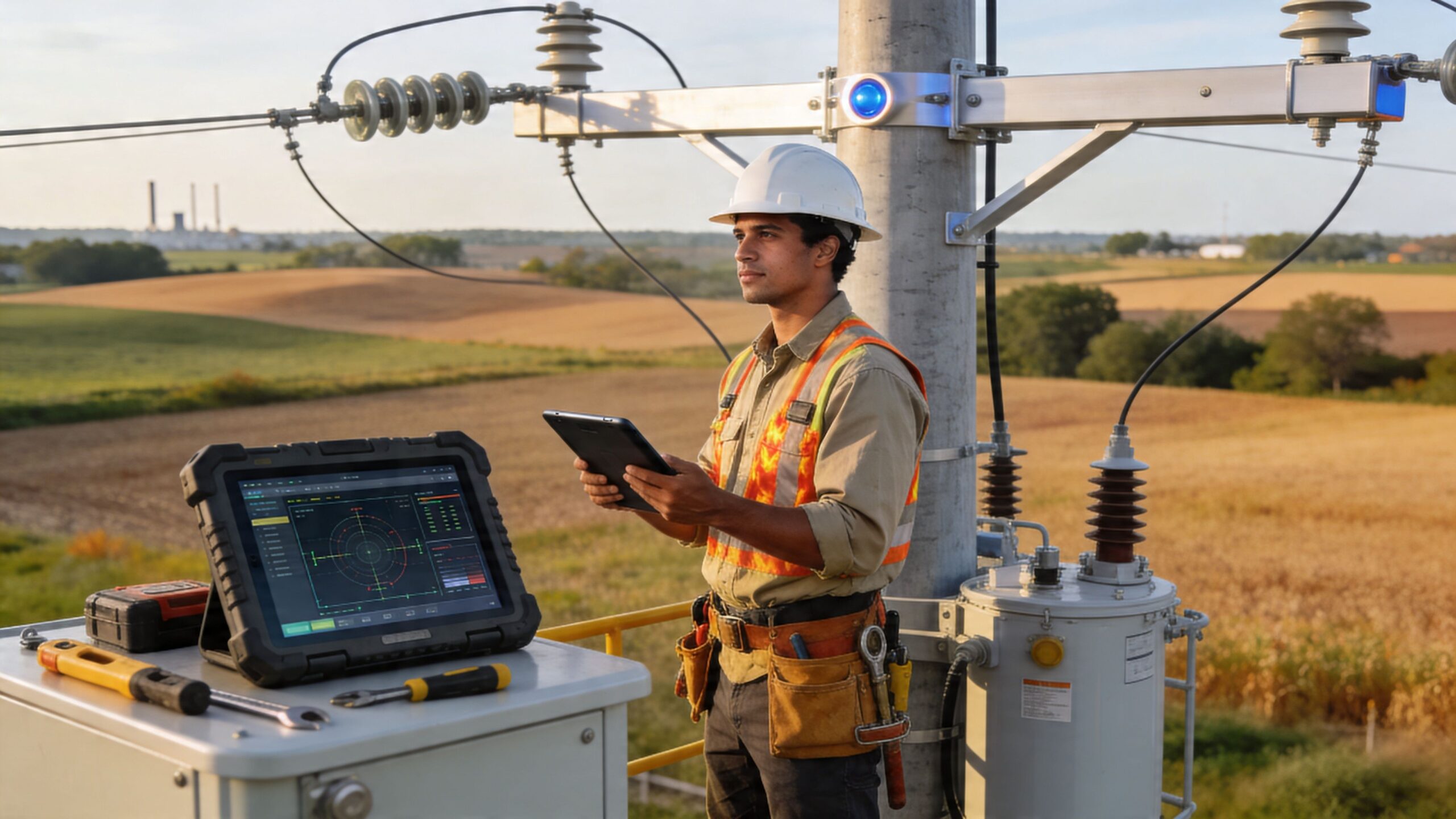
In Illinois, modern linework crosses into utility, telecom, broadband, wireless, and data center support. One crew may be working overhead distribution. Another may be handling make-ready, pole transfers, fiber placement support, small cell infrastructure, or network upgrades tied to broadband expansion. If you want a broad view of telecom infrastructure work, this overview of field and network project categories helps connect the dots between traditional outside plant work and the newer network build environment.
The job is broader than most applicants expect
A modern apprentice might spend part of the week around poles, anchors, guying, framing, or bucket work. In other settings, that same apprentice may support fiber crews, handle material staging, read prints, assist with grounding and bonding, or learn how network documentation affects what happens in the field.
That matters because hiring managers aren’t just screening for “toughness.” They’re screening for trainability. They want candidates who can work safely in the air, on the ground, around traffic, around power, and around increasingly technical infrastructure.
Practical rule: If you describe the job as “just climbing poles,” you already sound behind.
There’s also a hard truth many applicants miss. The online search process often creates more confusion than clarity. One of the biggest problems in Illinois is that job seekers see entry-level pay posted but get very little guidance on the actual path between apprentice and journeyman, even though many programs mention a 2 to 4 year timeline and the state has over 2,090 employed lineworkers, according to Lineman Central’s Illinois lineman jobs page.
The non-negotiables you need before you’re competitive
Some candidates waste months applying before they’ve handled the basics. That’s backward. Get yourself eligible first.
Here’s the practical checklist:
- Class A CDL: This is one of the first filters. If you can’t legally operate the equipment the job requires, you’re asking an employer to solve your problem for you.
- Physical readiness: You need balance, stamina, grip strength, comfort with heights, and the ability to work outside when conditions are ugly.
- Clean, dependable work habits: Showing up late, ignoring instructions, or treating PPE casually gets noticed fast.
- Comfort with mechanical and technical learning: You don’t need to know everything on day one, but you do need to learn quickly.
- Safety mindset: This isn’t motivational poster language. It’s the difference between a candidate who gets trusted and one who doesn’t.
What works and what doesn’t
Candidates get into trouble when they focus on image instead of readiness.
What works:
- Coming in with a CDL already done
- Taking groundman or adjacent field work seriously
- Asking specific questions about the apprenticeship process
- Showing you can follow procedure without ego
- Being honest about what you know and what you don’t
What doesn’t:
- Talking big about storm work without any field discipline
- Treating the trade like a shortcut to money
- Assuming gym strength replaces work conditioning
- Applying everywhere with a generic resume and no trade-specific certifications listed up top
A good apprentice candidate is usually steady, coachable, and alert. Crews can teach a lot. They can’t teach you to care about safety after you’ve already shown that you don’t.
Navigating Illinois Lineman Apprenticeship Programs
A candidate walks into an interview with a permit, a vague plan, and no clear answer when I ask which apprenticeship route he is pursuing. Another candidate shows up with a CDL, knows which locals or contractors he has contacted, and can explain why he is targeting utility linework versus telecom-heavy outside plant work. The second candidate usually gets remembered.
That is how this section should be approached. Illinois gives you more than one legitimate entry point, but hiring managers want to see that you picked a path on purpose. Random effort reads like random commitment.
Illinois has a large apprenticeship system across the trades, according to the Illinois Department of Employment Security apprenticeship page. For lineman candidates, that matters less as a headline number and more as proof that formal training pipelines already exist here. Your job is to figure out which one matches your goals, your timeline, and the kind of employer you want to work for.
Union apprenticeships in Illinois
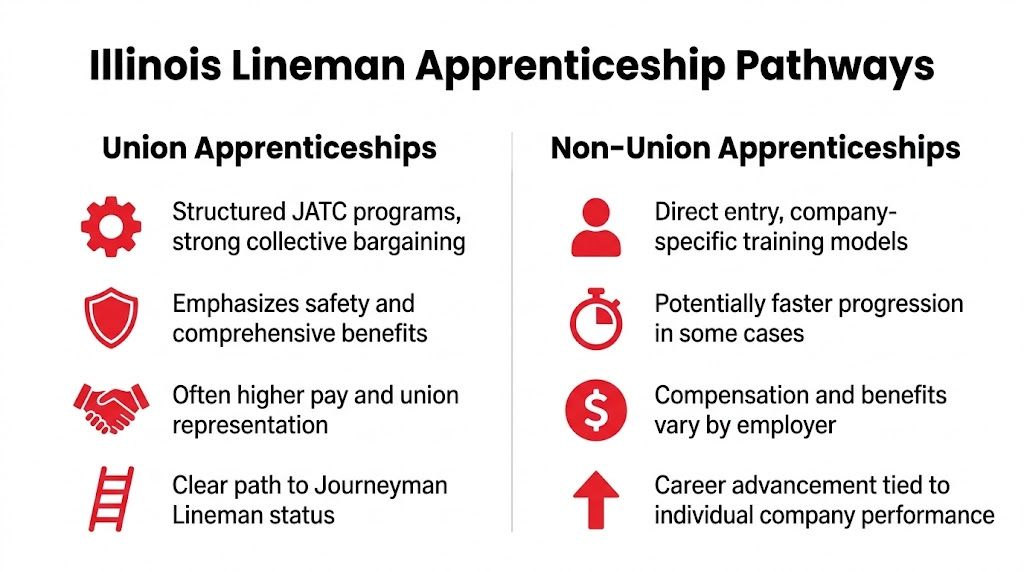
The union route usually runs through IBEW locals and JATC programs. It is structured, competitive, and slower than some first-time applicants expect. That structure helps serious candidates, but it also exposes anyone who is unprepared.
From a recruiter’s side, union-track applicants tend to separate themselves by how they handle process. They understand deadlines, testing, paperwork, ranking, and waiting for the right opening. That matters because crews and contractors do not just hire for physical ability. They hire for discipline.
Here is the practical reality. You may need to apply, test, interview, sign books, and keep building experience while you wait. Some candidates hate that. Others do well in it because they like a defined progression and clear standards.
Why employers respect the union path
Union-track candidates often bring a few strengths that are easy to spot:
- They are used to formal entry requirements.
- They expect documented training instead of guessing their way through the work.
- They usually understand that advancement is earned in steps.
- They tend to take safety rules and chain of command seriously.
The trade-off
The union route can be a strong fit for candidates who want a clear ladder and broad recognition in the trade. It can also test your patience. Openings do not appear on your schedule. If your plan depends on immediate placement, you need a backup strategy instead of sitting still and hoping.
Non-union apprenticeships in Illinois
The non-union path covers more ground than a lot of applicants realize. In Illinois, that can mean utility contractors, telecom construction firms, municipal employers, and company-run training systems that build apprentices from the ground up.
This route is often more direct. You apply to the employer, interview with the people who need labor, and get judged quickly on whether you can fit the crew and learn the work. For telecom-focused roles, that can be a real advantage. Companies want apprentices who are comfortable with outside plant construction, aerial work, underground support, fiber placement, traffic control, and jobsite discipline. They do not want someone chasing the title while ignoring the work mix.
That is where candidates often misjudge the opportunity. A telecom-heavy apprenticeship may not look like the classic image of transmission linework, but it can still build the habits employers care about. Show up ready, follow procedure, protect the crew, learn the systems, and you become useful fast.
Why some candidates do better here
Non-union programs often appeal to people who want:
- Direct contact with recruiters and supervisors
- Faster entry into active projects
- Company-specific training tied to the work being billed right now
- A chance to prove themselves without waiting on a long ranking process
The trade-off
Training quality depends on the employer. Some companies train apprentices well and keep standards high. Others throw people into the field and call it development. Before you commit, ask what work you will do, who trains apprentices, how advancement is measured, and whether the company has enough steady work to keep you progressing.
That last part matters. A lower starting wage can still be the better move if the company gives you consistent hours, real field exposure, and a path to stronger pay later. Candidates comparing options should look at the full picture, including apprentice lineman pay ranges in Illinois, because training quality and earnings usually move together over time.
Side-by-side comparison
| Path | Best fit for | Main strength | Main challenge |
|---|---|---|---|
| Union | Candidates who want a formal apprenticeship structure and can handle waiting | Clear standards, documented training, recognized progression | Competition, timing, and less control over entry |
| Non-union | Candidates who want direct employer access and faster exposure to active jobs | Quicker hiring contact, practical field experience, company-specific training | Training quality and advancement can vary a lot by employer |
How to choose without wasting a year
Start with the work itself. If you want the formal apprenticeship model and are willing to stay persistent through testing and delays, the union route makes sense. If you want to build credibility directly with an employer and get into the field faster, the non-union route can be a smart move.
Do not choose based on pride or internet noise. Choose based on where you can get trained well, stay employed, and become the kind of apprentice a foreman asks for by name. That is the standard hiring managers remember in Illinois.
Understanding Your Earning Potential and Benefits
Money matters. If you’re considering apprentice lineman jobs in illinois, you need a realistic picture of pay, not a sales pitch.
As of April 17, 2026, the average annual salary for a Lineman Apprentice in Illinois is $58,685, or $28.21 per hour, with a typical range from $42,200 annually ($20.29/hour) at the 25th percentile to $80,400 ($38.65/hour) at the 75th percentile, and top earners reaching $80,913, according to ZipRecruiter’s Illinois Lineman Apprentice salary data.
Read the range correctly
A lot of candidates see the high end and assume that’s what the first offer should look like. That’s not how this trade works.
That pay spread reflects several realities:
- where in the state the work is located
- what kind of employer is hiring
- how much relevant experience you already bring in
- what shift, overtime, or project demands come with the job
- whether the role is more general apprentice work or more specialized linework
The practical takeaway is simple. Don’t evaluate an offer by base wage alone. Evaluate the whole package.
Benefits matter more than many first-time applicants realize
Early-career candidates often compare only hourly pay. Hiring managers compare the full cost and value of the role.
That includes things like:
- Health coverage
- Retirement contributions or plan structure
- Paid time off
- Training investment
- Equipment standards
- Steady project pipeline
If you’re reviewing Illinois compensation benchmarks and want another market snapshot to compare against posted offers, this compensation page is useful as a secondary reference point.
A lower hourly number can still be the better job if the training is stronger, the work is steadier, and the benefits are better.
The part nobody explains well enough
Many listings still fail candidates on one point. They post starting pay but don’t clearly explain the financial progression between entry and journeyman status.
That’s why applicants should ask direct questions during the hiring process:
- How is pay reviewed during apprenticeship?
- What triggers advancement?
- Are increases tied to hours, tests, or supervisor evaluation?
- Is there a defined progression schedule?
- What benefits begin immediately, and what starts later?
Candidates who ask those questions sound more serious, not less. You’re not being difficult. You’re showing you understand this is a career decision, not just a temporary paycheck.
Your Job Search and Application Playbook
You get home from a long shift, fire off six applications, and hear nothing back. Then you see someone with less time in the trade get the call. From the recruiter side, the reason is usually simple. One candidate applied broadly. The other made it easy for a hiring manager to say yes.
That characterizes the job search in Illinois. Good openings draw a pile of applicants, and many of them look interchangeable on paper. Companies are sorting for readiness, work habits, and fit for the actual work in front of them. If the role leans telecom, outside plant, make-ready, or utility support, your application needs to show you understand that difference.

Where to look beyond the obvious
Job boards still matter, but serious applicants do not stop there. The better approach is to build a short target list and work it from multiple angles.
Use:
- IBEW local and JATC channels
- utility and contractor career pages
- telecom construction employers
- local networking through halls and field contacts
- direct applications to infrastructure companies with active outside plant work
From a recruiter’s perspective, direct applicants often stand out faster because they already know what kind of work the company performs. That matters. A candidate chasing only the title "lineman" can miss solid entry points in telecom construction, fiber, underground support, and make-ready work that build the same habits hiring managers want to see.
If you are applying into formal apprenticeship channels, handle the basic entry requirements early. In Illinois, applicants are commonly screened first for things like a Class A CDL, then for whether they can follow the application process cleanly, test well enough, and interview like someone ready for field conditions. Groundman, telecom, construction, or heavy equipment experience helps because it shows you are not guessing about outdoor work, crew structure, or jobsite discipline.
Build a resume a recruiter can scan in seconds
Recruiters skim first. If your CDL, work history, and field readiness are buried halfway down the page, you created extra work for the person deciding whether to call you.
Put the trade-relevant items near the top:
- Class A CDL
- Air brakes endorsement if applicable
- CPR or safety certifications if applicable
- Groundman, utility, telecom, construction, or equipment experience
- Travel availability
- Outdoor work history
- Shift flexibility
Keep the language plain. "Operated commercial vehicles," "worked in all weather," "followed daily tailboard and site safety procedures," and "supported aerial and underground crews" say more than empty phrases about being motivated.
A warehouse lead, military motor transport operator, telecom laborer, tree crew member, or heavy equipment helper can all be relevant. The key is translating that background into hiring language a field supervisor respects. For formatting and keyword strategy, this guide on how to pass ATS systems resume is useful because many employers still filter applications through tracking software before a recruiter reviews them.
What a strong trade application sounds like
Hiring managers are listening for proof, not enthusiasm by itself.
A weak application stays generic. A strong one makes a few points clear right away:
- I already meet the driving requirement or I am close and have a firm timeline.
- I have worked outdoors in physically demanding conditions.
- I understand safety rules, chain of command, and crew expectations.
- I can travel or work irregular hours if the project requires it.
- I am applying for a real apprenticeship path, not trying to skip the process.
That is the difference between someone who likes the idea of the trade and someone a company can put on a crew.
Questions to ask in the interview
Good candidates ask questions that show judgment. They want to know how the work is organized, what kind of crews they will support, and what the company expects in the first stretch.
Ask things like:
- Training structure: How is field training organized for new apprentices?
- Crew assignment: Will I stay with one lead or move between crews?
- Work mix: Is the role mostly overhead utility, telecom, make-ready, underground support, or a mix?
- Travel and scheduling: How much travel should I expect, and how often do schedules change?
- Advancement: What does progression look like between entry and higher apprentice steps?
- Safety: What does the onboarding process include before a new apprentice goes into active field conditions?
Those questions help you too. A company that gives clear answers usually has a clearer process.
If you are ready to stop browsing and put your name in front of an actual hiring team, use a direct portal like Southern Tier Resources' lineman application page. That kind of route matters because recruiters can quickly tell who read the posting, understood the work, and applied with purpose.
What to Expect During Your Apprenticeship
The first stretch of an apprenticeship usually humbles people. Not because the trade is trying to break you, but because it forces you to tighten up fast.
In the first few weeks, nobody expects you to know everything. They do expect you to listen, carry your share, keep your head on straight, and stop making the same mistake twice. New apprentices who struggle most are usually the ones who talk too much, move too slow, or act casual around risk.
The first 90 days feel longer than they look on paper
Early on, your day is full of details that don’t seem dramatic from the outside. Truck checks. Material handling. Tool staging. Learning how your journeyman wants the site set up. Watching how the crew communicates before a lift, a pull, a cutover, or work near energized facilities.
That phase matters because trust in this trade is built by repetition. If you can be counted on for the basics, you’ll get more responsibility. If you can’t, your progression slows down.
The apprenticeship model is structured for a reason
In Illinois, apprenticeship progression generally follows a 3 to 4 year model with about 2,000 on-the-job training hours per year, and apprentices move through phases that include testing and evaluation. The same guidance notes common stumbling points such as 15% repeat rates on step-tests and 20% dropout related to weather attrition in some programs, with the full path to journeyman often requiring 7,000 to 8,000 hours, according to the Illinois workNet apprenticeship guide.
That sounds formal because it is formal. You’re not just logging time. You’re proving competence.
What day-to-day life really tests
Three things wear apprentices down more than anything else:
- Weather: Heat, cold, wind, rain, mud, and long days outside
- Schedule pressure: Storm response, changing priorities, and overtime
- Mental discipline: Staying sharp when the work becomes physically routine
A solid journeyman will teach you. A solid apprentice makes that easy by staying observant, asking smart questions, and keeping ego out of the truck.
The apprentice who lasts isn’t always the loudest or strongest. It’s usually the one who stays teachable when the work gets uncomfortable.
Storm work is part of the culture too. Even if your role leans telecom or mixed infrastructure, you may still deal with urgent restoration conditions, long shifts, and the expectation that you can operate safely when everyone is tired. That’s where habits matter. Good habits travel. Bad ones show up when the pace spikes.
A Look Inside Southern Tier Resources
Not every apprentice wants a career that stays inside one narrow lane. Some want utility-adjacent work with more exposure to the telecom and network side of infrastructure. That’s where a company operating in fiber, wireless, and data center environments can stand apart.
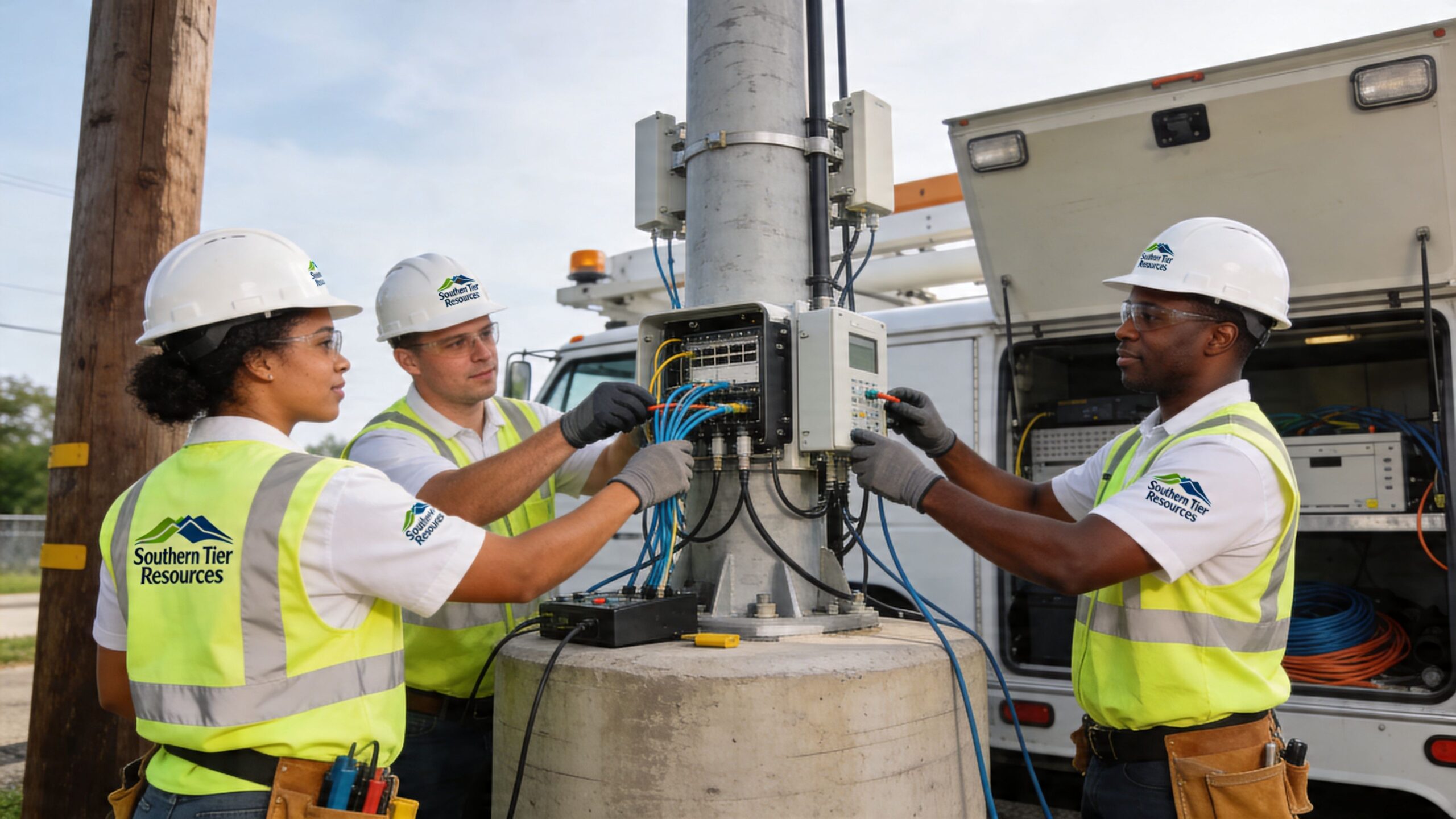
Southern Tier Resources works in end-to-end telecom infrastructure, which changes the profile of the ideal apprentice. The strongest candidates for that kind of environment don’t just think in terms of poles and wires. They’re also interested in documentation, network reliability, fiber deployment quality, structured cabling discipline, and the way field construction ties into customer uptime.
Why telecom-focused field work is a different opportunity
In traditional linework, your world may stay centered on distribution, transmission, substations, and restoration. In telecom-focused infrastructure, the work can also include fiber construction support, small cell and macro network upgrades, make-ready coordination, testing support, and projects tied to data center connectivity.
That doesn’t make one path better than the other. It makes the day-to-day different.
Candidates who do well in telecom-heavy environments usually bring a few specific traits:
- they’re comfortable with evolving standards and project scopes
- they understand that documentation quality affects future maintenance
- they don’t treat precision as optional
- they can shift between physical outside work and technical task discipline
What recruiters notice right away
From a recruiting standpoint, a candidate stands out when their background shows more than raw labor capacity.
The stronger profile usually includes a mix of:
- field reliability
- mechanical sense
- comfort with safety procedures
- ability to learn technical workflows
- professional communication with crews and supervisors
If you’ve handled utility support, telecom construction, CDL driving, bucket support, material control, or even construction work where accuracy mattered every day, that can translate well. The key is whether you present it as relevant experience instead of generic hard work.
What doesn’t land well with telecom infrastructure employers
Candidates lose ground when they treat technical environments like they’re interchangeable with any outdoor labor job.
A few examples:
- saying you “just want to climb” without showing interest in the systems being built
- acting like documentation and testing are office problems instead of field quality issues
- dismissing broadband or wireless work as less serious than utility work
- giving the impression that safety steps slow you down
That last one is a deal-breaker. Telecom and data center infrastructure work can move fast, but speed without process creates rework, outages, and field risk.
Good infrastructure companies don’t hire apprentices to be reckless. They hire them to become dependable.
Who tends to thrive in this environment
The best apprentice fits for a company like Southern Tier Resources are usually the ones who like variety and accountability at the same time. They don’t mind changing conditions. They don’t freeze when technology enters the conversation. They want to understand why the build is being done a certain way, not just where to stand.
That matters in telecom because the field crew’s work affects everyone downstream. Poor labeling, sloppy handling, weak testing discipline, or bad closeout habits don’t stay small for long.
If you want a career at the intersection of trade work and network infrastructure, this kind of employer can be a strong fit. You get the demands of field construction, but you also get exposure to the systems that keep carriers, ISPs, wireless operators, and data facilities running.
Southern Tier Resources is a strong option for candidates who want more than a generic field role. If you’re serious about apprentice lineman jobs in illinois and want to build toward fiber, wireless, and network infrastructure work with a company that understands end-to-end delivery, explore current opportunities through Southern Tier Resources.