When you see a cell tower on the horizon or a small antenna on a city street light, you're looking at the work of a cell site company. These are the specialized firms that mobile carriers like Verizon and T-Mobile hire to physically build, upgrade, and maintain the infrastructure that keeps us all connected.
Think of them as the general contractors for the wireless world. They take a carrier's complex engineering blueprint and turn it into a real, functioning piece of the network.
The Architects of Wireless Connectivity
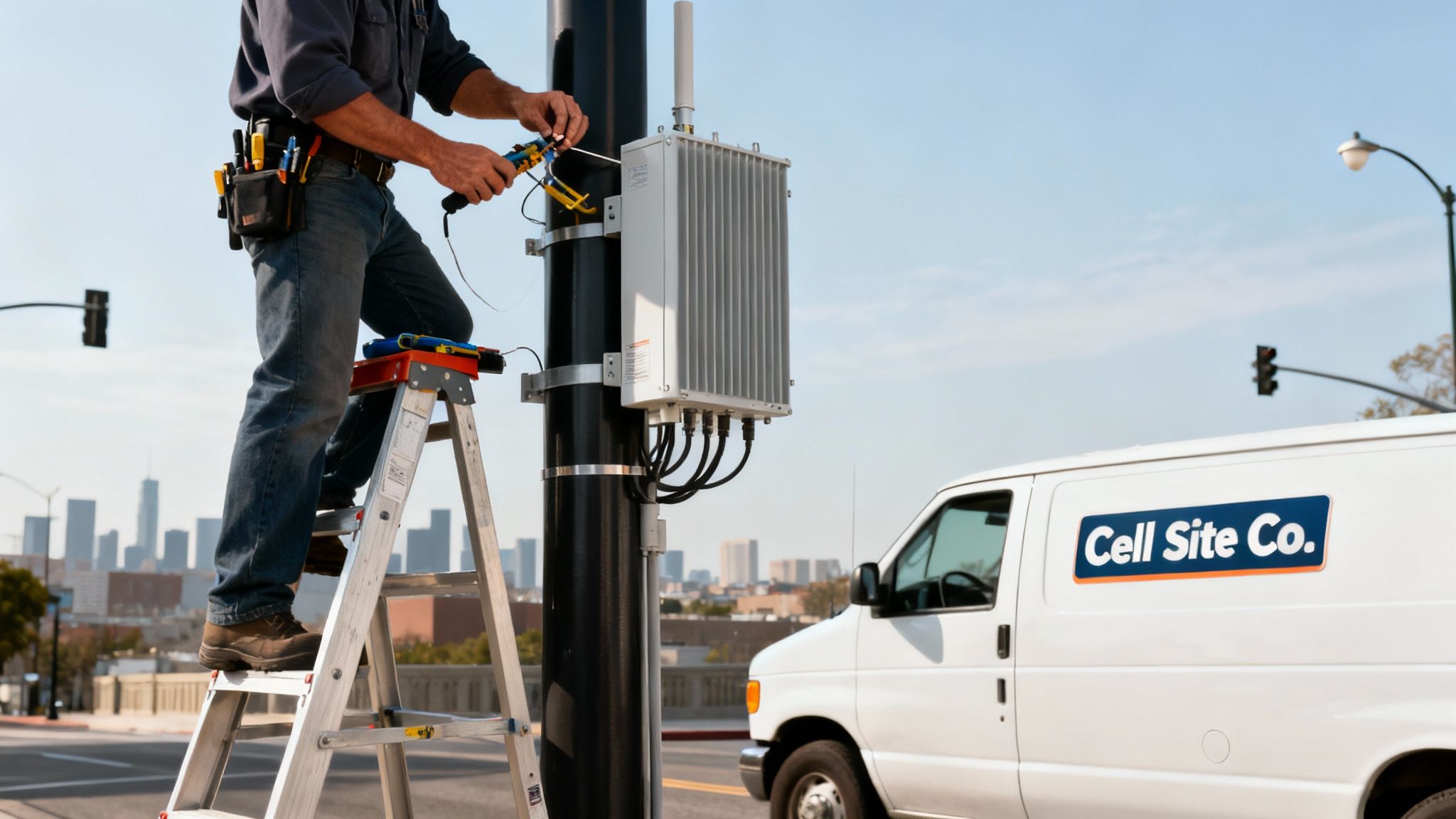
A mobile carrier might have a perfect plan for expanding its 5G coverage, but that plan is just an idea until a cell site company gets involved. These are the hands-on teams that handle the messy, real-world work of making wireless signals a reality.
Without them, you wouldn't be able to make a call, stream a video, or browse the web on the go. They are the essential link between a network provider's vision and the actual equipment that delivers a signal to your phone.
From Tower Tops to City Streets
The work of a cell site company is incredibly varied, covering just about every environment you can imagine. One day they might be on a rural hilltop, and the next they could be working on a busy downtown street.
You'll find them managing projects like:
- Macro Towers: Building those big, traditional towers you see along highways that provide coverage over vast distances.
- Rooftop Sites: Installing antennas and equipment on top of urban buildings to boost network capacity where it's needed most.
- Small Cells: Deploying those compact, low-power antennas on streetlights and utility poles to fill in coverage gaps in dense areas like stadiums or business districts.
This isn't just about keeping the current network running; it's about pushing it forward. The industry is in the middle of a massive expansion, driven by our ever-growing demand for data and the global rollout of 5G.
The cell site tower market is forecast to grow by USD 8.03 billion over the next five years, with a compound annual growth rate (CAGR) of 3.9%. North America is expected to account for a massive 37% of that global growth. You can read more about these market projections to see what's driving this expansion.
More Than Just Construction
While putting up steel is a huge part of the job, a good cell site company does far more than just build things. They are true end-to-end project managers who have to master everything from technical engineering and regulatory hurdles to complex logistics.
This table breaks down the key functions they handle.
Core Functions of a Cell Site Company
| Core Function | Description | Impact on Network |
|---|---|---|
| Site Acquisition & Zoning | Identifying viable locations, negotiating leases, and securing all necessary permits from local authorities. | Determines where coverage can be deployed and how quickly a network can expand. |
| Engineering & Design | Translating the carrier's radio frequency (RF) goals into detailed construction and electrical plans. | Ensures the site is built to specification for optimal signal strength and reliability. |
| Construction & Installation | Managing all physical work, including foundation, tower erection, and antenna/equipment mounting. | The actual "build" phase that brings the physical network infrastructure to life. |
| Testing & Integration | Conducting rigorous tests (like PIM and Sweep) to ensure all components work together and meet performance standards. | Verifies that the site is ready to handle live traffic and deliver high-quality service. |
| Maintenance & Upgrades | Performing routine upkeep, troubleshooting issues, and upgrading equipment for new technologies like 5G. | Keeps the network running smoothly and ensures it can adapt to future demands. |
In the end, their mission is to make sure every new or upgraded site is built safely, on schedule, and exactly to the carrier's specifications. They lay the physical foundation that makes all of our digital communication possible.
The Different Types of Cell Site Partners
Not all cell site companies are created equal. The partner you choose depends entirely on what you're trying to accomplish, and understanding their business models is the first step to getting it right. Think of it like building a house: you could hire a general contractor to manage the entire build, buy a pre-built home from a developer, or rent a room in a managed apartment complex. Each path solves a different problem.
In the wireless industry, partners generally fall into one of three buckets. Your choice will hinge on whether you need a team to execute your vision from scratch, a landlord to lease space from, or a shared infrastructure provider to light up a specific venue.
The Turnkey Contractor
A turnkey contractor is the "do-it-all" general contractor of the cellular world. This is the partner you hire to take a project from an idea on a napkin all the way to a fully operational site. Mobile carriers often bring them in to manage the entire lifecycle of a network buildout, from site acquisition and design to construction and final testing.
Their real value is in being a single point of accountability. Instead of the carrier trying to coordinate separate firms for zoning, engineering, and construction, the turnkey contractor handles it all.
This integrated approach brings some serious advantages:
- Simplified Management: You have one throat to choke. One partner is responsible for the timeline, budget, and quality.
- Fewer Delays: With all teams under one roof, the handoffs that typically cause friction and slow-downs between different vendors simply disappear.
- Predictable Results: An experienced turnkey firm has seen it all before. They can anticipate roadblocks and manage risks before they become major problems.
A turnkey contractor is hired to absorb the complexity. They turn a network blueprint into a live asset, freeing up the client from the day-to-day chaos of construction and regulatory hurdles.
The Tower Company or TowerCo
Next up are Tower Companies, or TowerCos. These companies are the real estate giants of the wireless world. Their entire business is built on owning, developing, and maintaining the physical tower structures and then leasing space on them to mobile carriers.
The TowerCo model is all about shared infrastructure. A single tower can host antennas from several competing carriers, each paying rent for their spot. This creates incredible efficiency and prevents the need for three or four separate towers cluttering the same intersection. It's a model that has come to completely dominate the industry.
Just how dominant? An astonishing 97% of all cell towers in the United States and Mexico are now owned by independent tower companies, not the carriers themselves. The global telecom tower market was recently valued at over USD 61 billion and is expected to rocket past USD 165 billion within a decade, thanks largely to the massive infrastructure demands of 5G. You can find more details in this telecommunications industry outlook from Deloitte.
The Neutral Host Provider
Finally, there are neutral host providers. These companies are specialists in building and managing shared wireless networks in places where traditional macro towers just won't work—think large indoor venues or dense urban canyons.
They deploy systems like Distributed Antenna Systems (DAS), which allow multiple carriers to plug into a single, unified network of small antennas spread throughout a location. It’s the go-to solution for ensuring everyone has a solid signal in places like:
- Stadiums and arenas
- Airports and convention centers
- Sprawling university campuses
- Large corporate headquarters
For a venue owner, partnering with a neutral host is a no-brainer. They can offer flawless connectivity to visitors on every major carrier without having to negotiate and manage separate infrastructure deals with each one.
Mapping the Cell Site Project Lifecycle
Building out wireless infrastructure is a marathon, not a sprint. A single cell site project involves a sequence of highly coordinated phases, each with its own set of challenges and potential roadblocks. Successfully navigating this journey demands meticulous planning, deep expertise, and flawless execution from start to finish.
Think of it like building a custom home. You don't just show up one day and start hammering nails. It all starts with finding the right piece of land, getting architectural plans drawn up, securing city approvals, and then coordinating dozens of specialized trades before anyone can move in. A cell site follows a remarkably similar, albeit more technical, path.
Let's walk through the entire project lifecycle, from a simple point on a map to a fully operational part of the wireless network. Understanding these interconnected steps shows why having a single, experienced partner to manage the whole process is so valuable—it prevents costly delays and ensures a smooth deployment.
Phase 1: Site Acquisition and Engineering
Before any concrete gets poured or steel goes up, the perfect location has to be found and secured. This initial phase, known as Site Acquisition and Engineering, is a delicate dance between radio frequency (RF) science and real-world logistics.
It all begins when RF engineers identify a "search ring"—a specific geographic area where a new site is needed to boost coverage or add capacity. From there, a cell site company takes over, acting as both a detective and a negotiator.
Their team scouts for viable properties within that ring, weighing crucial factors like:
- Zoning Laws: Is the property even zoned for a telecommunications structure?
- Accessibility: Can construction crews and equipment actually get to the site for the build and future maintenance?
- Environmental Impact: Are there any hidden deal-breakers like wetlands, endangered species, or historical considerations that could kill the project?
- Lease Negotiations: Securing a long-term lease agreement with the property owner that makes financial sense for everyone.
Once a candidate site is locked down, engineers get to work creating the detailed designs and construction drawings that will serve as the blueprint for the entire project.
Phase 2: Permitting and Zoning
With a signed lease and an engineering plan in hand, the project moves into what is often the most frustrating and unpredictable phase: Permitting and Zoning. This is where the project meets public opinion and local government bureaucracy. A top-tier cell site company has to navigate a complex web of municipal codes, public hearings, and various regulatory bodies.
Before any vertical construction can even be considered, the site must be properly prepared. The initial phase requires thorough site preparation excavation, from clearing land to grading the soil, which creates a stable and compliant foundation. To get a better handle on what this entails, you can review this detailed guide on site preparation excavation.
Key approvals often include:
- Zoning Board Hearings: Presenting the project to local officials and the community to gain their buy-in.
- Building Permits: Making sure all construction plans meet local safety and structural codes.
- FAA and FCC Filings: Complying with federal regulations for tower height, lighting, and radio frequency emissions.
This stage can easily drag on for months—or even years. Success here often comes down to the company's experience and relationships within that specific city or county.
Phase 3: Construction and Installation
Once all the approvals are finally in place, the physical work can begin. The Construction and Installation phase is where blueprints become reality. This is highly specialized work managed by experienced crews who put safety and precision above all else.
The process usually unfolds in a specific, methodical order:
- Civil Work: The crew starts on the ground, handling foundation excavation, pouring concrete, and installing the grounding systems.
- Tower Erection: For larger macro sites, massive sections of the tower are lifted into place by crane and bolted together piece by piece.
- Antenna and Line Installation: Certified tower climbers scale the structure to mount antennas, radios, and run all the necessary cabling.
- Shelter and Equipment Placement: A ground-level shelter or cabinet is installed to house the sensitive baseband units, power systems, and backup batteries.
For those curious about the nitty-gritty of this stage, exploring professional wireless network installation services can offer a much deeper look into the technical skills involved.
The journey from a blueprint to an operational cell site is complex, with each stage presenting unique challenges and requiring specialized expertise. The table below breaks down this lifecycle, highlighting the key activities and common hurdles that teams must navigate to bring a new site online successfully.
Cell Site Project Lifecycle Stages and Key Activities
| Project Phase | Key Activities and Objectives | Common Challenges |
|---|---|---|
| Site Acquisition & Engineering | Identify search ring, scout properties, negotiate leases, create site designs and construction drawings. | Finding willing landowners, unfavorable zoning, difficult site access. |
| Permitting & Zoning | Submit applications, present at public hearings, secure building permits, and obtain FAA/FCC approvals. | Lengthy bureaucratic delays, local opposition, changing municipal codes. |
| Construction & Installation | Perform civil work (foundation, grounding), erect the tower, install antennas and lines, set up equipment shelters. | Weather delays, supply chain issues, skilled labor shortages. |
| Fiber & Backhaul Integration | Coordinate with fiber providers, trench and install fiber optic cables, or install microwave links. | Delays in fiber delivery, right-of-way access problems. |
| Testing & Commissioning | Conduct PIM and Sweep tests, integrate site with the wider network, perform final quality checks. | Equipment malfunctions, interference issues, network integration conflicts. |
Successfully managing these stages requires a partner who not only understands the technical aspects but can also anticipate and mitigate the inevitable challenges that arise, ensuring the project stays on schedule and within budget.
Phase 4: Fiber and Backhaul Integration
A cell tower is completely useless without a connection to the larger network. The Fiber and Backhaul phase is all about building this critical data link. "Backhaul" is just the industry term for the digital highway that carries all the voice and data traffic from the cell site back to the carrier's central network.
Think of the antennas on the tower as the local roads collecting traffic from every nearby phone. The backhaul connection is the multi-lane interstate that moves all that traffic at high speed to its final destination. Without it, you just have a massive, localized traffic jam.
While some very remote sites might use microwave links, the vast majority rely on high-capacity fiber optic cables for their incredible speed and reliability. A cell site company coordinates with fiber providers to trench and install these connections, plugging the new site into the digital world.
This infographic visualizes the distinct roles different cell site partners play, from turnkey contractors managing the full lifecycle to specialized TowerCos and neutral hosts.
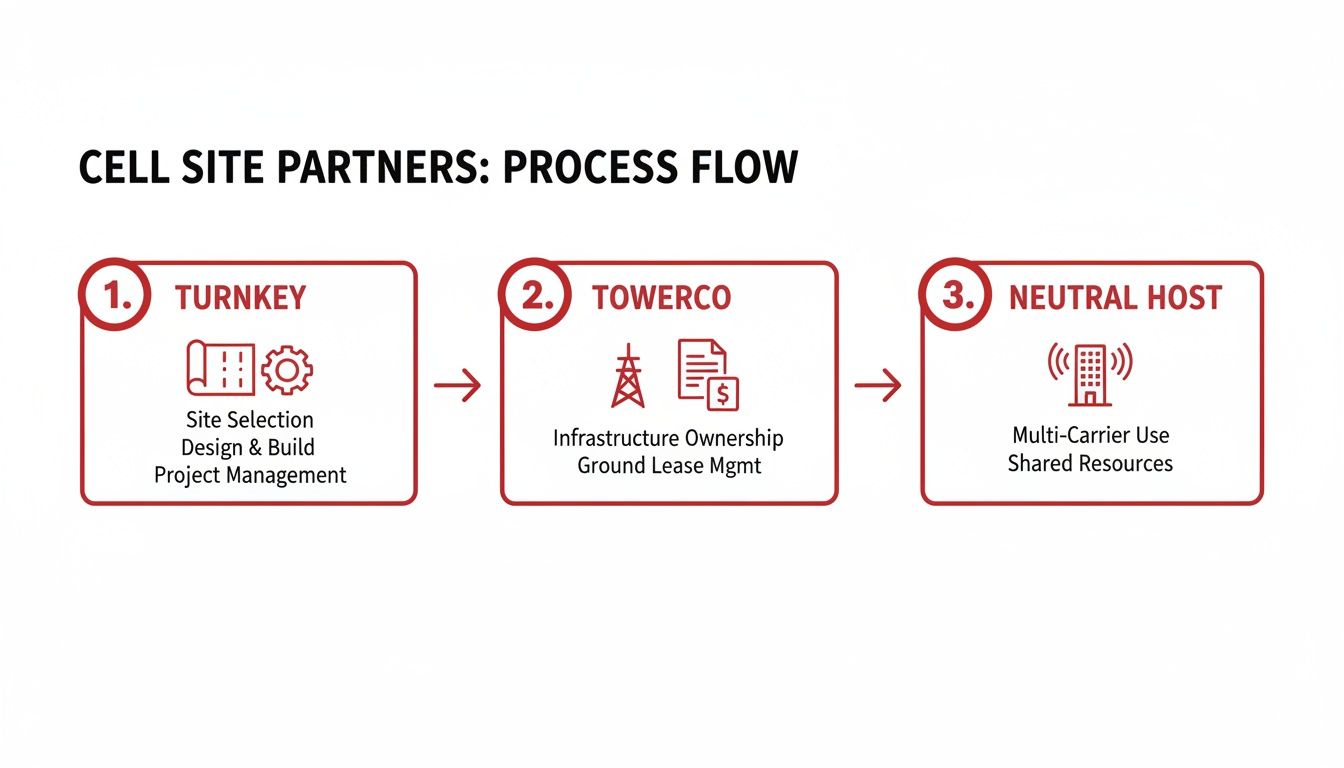
The visual clarifies how a turnkey firm handles every single stage, while others focus on owning and managing specific infrastructure. This really underscores the importance of choosing the right partner model for your project's specific needs.
Phase 5: Testing and Commissioning
The last hurdle before a site goes live is Testing and Commissioning. In this phase, technicians perform a battery of intense tests to make sure every single component is working perfectly and meets the carrier's strict performance standards.
This includes things like PIM (Passive Intermodulation) and Sweep testing to check the integrity of every cable, along with integration checks to confirm the site can seamlessly hand off calls to neighboring sites.
Once the site passes every test and is officially commissioned, it's finally "on-air" and ready to serve customers.
How to Select the Right Infrastructure Partner
Choosing a cell site company is easily one of the most critical decisions you'll make for any network deployment. The right partner becomes a true extension of your team, pushing for quality and efficiency. The wrong one? Well, that's a fast track to budget overruns, blown deadlines, and a whole lot of headaches.
This decision is about so much more than just the lowest bid. It’s about finding a team with the right experience, discipline, and resources to get the job done right the first time.
The stakes have never been higher. To keep pace with demand, U.S. wireless carriers recently poured nearly $30 billion into their networks in a single year, lighting up over 15,000 new cell sites. This explosion in growth, detailed by industry groups like CTIA.org, shows just how critical a reliable construction partner is to staying competitive.
So, how do you cut through the noise and find the right fit? Let's walk through a practical framework for vetting potential partners, focusing on the non-negotiables that separate the pros from the pretenders.
Validating Experience and Track Record
First things first: you need to see a proven track record. A cell site company’s project portfolio is its resume, and it's your window into their real-world capabilities. Don't just take their word for it—dig in and verify their experience.
Get specific with your questions:
- Similar Scopes of Work: Have they actually built what you need built? A team that specializes in urban small cells might not be equipped for a challenging rural macro tower build.
- Regional Expertise: Do they know the local landscape? Navigating the unique permitting and zoning hurdles in your target region is a massive advantage. Local knowledge and relationships can shave months off a project timeline.
- Technology Proficiency: Ask for case studies. Can they show you successful 5G C-band upgrades, complex fiber backhaul integrations, or other projects that mirror your technical requirements?
A partner with a deep well of experience brings foresight to the table. They’ve seen what can go wrong and know how to stop problems before they start.
Scrutinizing Safety and Compliance
In this industry, safety isn't just a priority; it has to be a core value baked into a company's DNA. A contractor’s safety record speaks volumes about their professionalism, training, and discipline. One incident can shut down a project, tarnish your reputation, and have devastating human consequences.
A strong safety program isn't about checking boxes. It's about a proactive culture where every single person on the crew feels empowered to identify and mitigate hazards. That commitment is the bedrock of every successful project.
When you're vetting a partner, put their safety protocols under a microscope. Ask for their EMR (Experience Modification Rate), inquire about their ongoing training programs, and demand to see their safety plans for high-risk work like tower climbing. A professional-grade company won't just answer these questions—they'll be proud to show you their commitment to a safety-first culture. This dedication is essential for delivering dependable turnkey network solutions.
Assessing Mobilization and Documentation
The final pieces of the puzzle are agility and attention to detail. Network needs can shift on a dime, and you need a partner who can keep up.
Can they handle 24/7 mobilization for an emergency repair or to fast-track a critical project? Do they have the crews, equipment, and logistics ready to roll without cutting corners on quality or safety?
Just as crucial is their approach to paperwork. Meticulous as-built documentation isn't an optional extra; it's a critical deliverable for the long-term health of your network. These precise records are what your team will rely on for future maintenance, troubleshooting, and upgrades. A partner who provides clean, accurate as-builts proves they're invested in the entire lifecycle of your infrastructure, not just the initial build.
Getting a Grip on Costs and Timelines
When it comes to building out a network, every project eventually comes down to two questions: How much is this going to cost, and how long is it going to take? For cell sites, the answers are never straightforward. The final budget and schedule are always a tug-of-war between geography, technology, and good old-fashioned red tape.
Figuring out these variables is the key to setting expectations you can actually meet and avoiding major financial headaches. A good cell site partner can give you a realistic forecast by digging into the specifics of your project, which helps prevent nasty surprises down the road.
What Drives Up the Bill?
The cost of a cell site isn't a fixed price. It can swing wildly depending on what you’re trying to build and where you’re trying to build it. A simple equipment upgrade on a tower that’s already standing is a world away from breaking ground on a new one in a difficult spot.
A few big things will move the needle on your budget:
- Location and Terrain: Dropping a site into a dense city means dealing with higher labor costs, traffic control nightmares, and tricky logistics. On the flip side, a site out in the middle of nowhere might force you to build miles of new access roads and run power lines, which gets expensive fast.
- Type of Construction: A brand-new, 180-foot monopole tower is a serious capital investment. By comparison, mounting a small cell antenna on a utility pole is much cheaper per site, but these projects often require hitting hundreds of locations to get the same coverage.
- Technology and Equipment: The gear itself matters. The difference between deploying 4G and 5G equipment can be huge, as can the complexity of the antennas and radios. Upgrading a tower for new frequency bands often means beefing up the structure to handle heavier loads, which adds more cost.
To get a better handle on the details, it helps to understand the full scope of professional cell tower construction and see how all these pieces fit together.
The Real Reason Your Project Is Late: Red Tape
More often than not, the biggest delays have nothing to do with pouring concrete or hoisting steel. It’s the regulatory approval process that becomes the longest and most unpredictable part of the job. This is where a seasoned cell site company with deep local knowledge really earns its keep.
The permitting and zoning phase can easily take longer than the actual build. Navigating municipal boards, public hearings, and federal agencies requires patience, preparation, and established relationships to keep a project moving forward.
It's these administrative hurdles that stretch timelines the most. Getting them right is the mark of a true pro.
Common Timeline Delays
Here’s a look at the usual suspects when a project schedule starts to slip:
- Zoning and Permitting: Just getting the green light from a local planning board can be a long, drawn-out affair. You might face multiple public hearings and have to address a ton of community feedback. One "no" vote can send the whole project back to square one.
- Environmental and Historical Reviews: Before you can build, you often have to prove the site won’t disturb wetlands, mess with endangered species, or sit on a historical landmark. These studies, which fall under rules like the National Environmental Policy Act (NEPA), can easily add months to the clock.
- Utility Coordination: Getting power and fiber to a new site means you're at the mercy of the local utility companies. Their schedules and crew availability can create bottlenecks that are completely out of your construction partner's control.
- Federal Aviation Administration (FAA) Approval: Any structure over 200 feet tall—or even shorter ones near an airport—needs a thumbs-up from the FAA to make sure it’s not a hazard to planes. This involves a whole lot of detailed paperwork and analysis.
Staying ahead of these regulatory steps is everything. A cell site partner who sees these challenges coming and prepares airtight documentation from day one can shave significant time off your schedule and keep your network expansion moving.
Maintaining and Future-Proofing Your Network
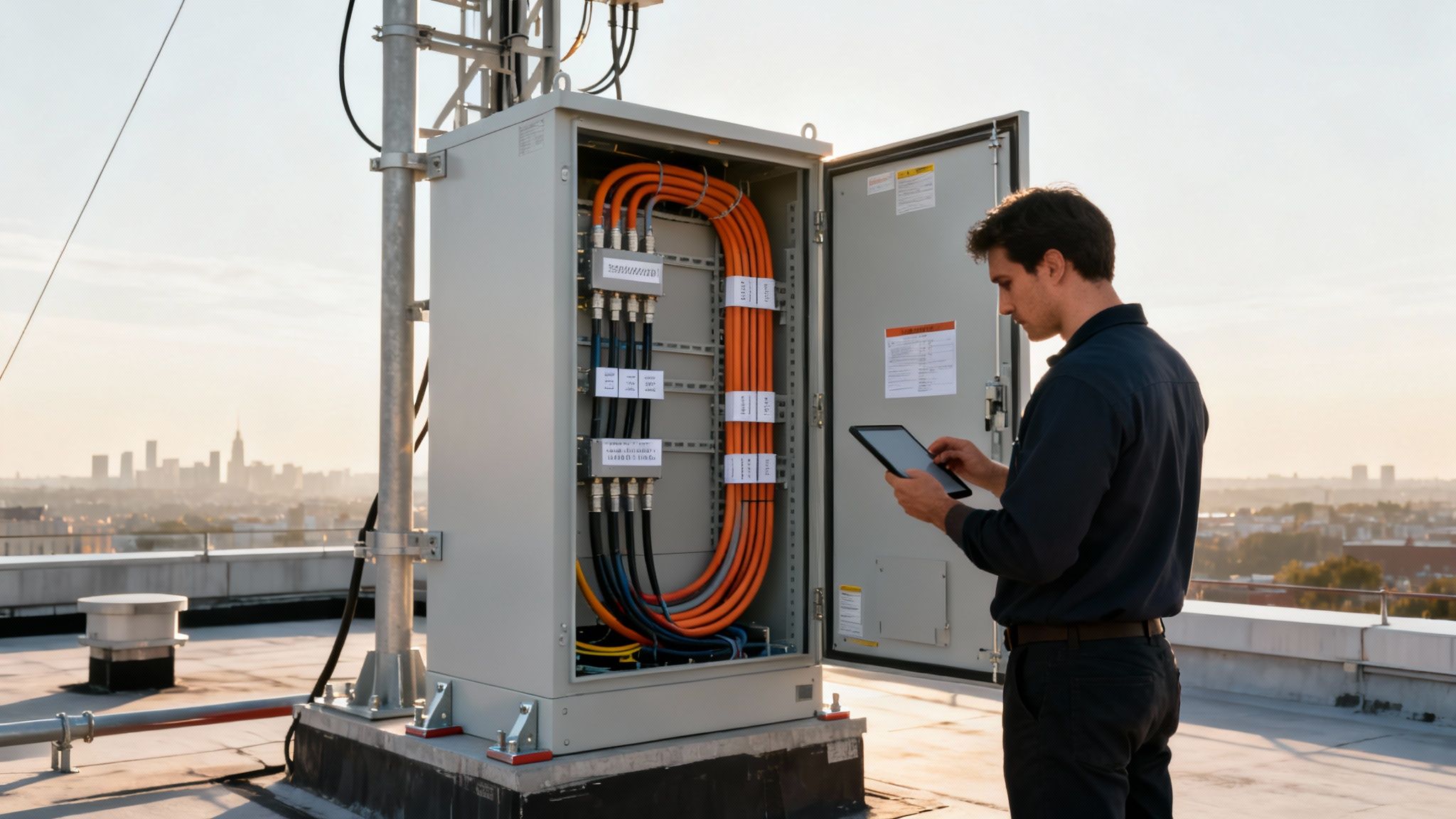
Getting a cell site live isn’t the finish line—it’s just the beginning. Once a site is operational, the real work of maximizing its value and lifespan starts. A long-term strategy is essential for protecting your significant infrastructure investment, focusing on both day-to-day reliability and the network's ability to adapt down the road.
This all hinges on a solid maintenance plan. A dependable cell site company delivers the ongoing support needed to keep the network running at peak performance. It's a proactive approach that heads off downtime and safeguards the service quality your users depend on.
The Importance of Proactive Upkeep
Think of your cell site like a high-performance vehicle; it needs regular tune-ups, not just a trip to the shop when it breaks down. Proactive maintenance is what stops a minor glitch from turning into a major outage that hits your customers and your bottom line.
A good partner will have a comprehensive maintenance program that covers all the bases:
- Routine Inspections: Regularly scheduled visits to physically check the tower, equipment, and grounding systems for any signs of wear and tear.
- Preventative Maintenance: Swapping out components with a known shelf life, like backup batteries or cooling fans, before they have a chance to fail.
- Emergency Response: The ability to get crews on-site 24/7 for urgent repairs after a storm, vandalism, or an unexpected equipment malfunction.
This kind of hands-on care is what keeps network assets performing reliably for years. It's also vital to track how national networks evolve. For instance, the ongoing extension of NZ's Public Safety Network Cellular Services shows just how critical and dynamic these systems can be.
Building for Tomorrow Today
Beyond just keeping the lights on, a forward-thinking cell site partner helps you future-proof your network. This is all about making smart design and construction choices now that will make tomorrow's upgrades simpler and less expensive.
You have to anticipate the next wave of technology. The gear on a tower today is not going to be there forever. When a site is built with the future in mind, that inevitable transition becomes faster, cheaper, and far less disruptive.
Future-proofing isn't about having a crystal ball. It's about building in flexibility, so when the next generation of technology arrives, your infrastructure is an asset, not an obstacle.
A few practical future-proofing tactics include:
- Installing Extra Conduit: It costs very little to run additional empty pathways for fiber cables during the initial build, but it's a massive expense to trench again later.
- Strengthening Structures: Designing tower foundations and mounts to handle heavier and more powerful antennas than what you currently need.
- Allocating Space: Leaving plenty of room in equipment shelters and on the tower itself for the radios and power systems of tomorrow.
This kind of strategic foresight ensures your network is not only resilient today but is also ready to absorb the next generation of wireless technology, protecting your investment for the long haul.
Your Questions Answered: Inside Cell Site Projects
If you're diving into a wireless infrastructure project, you've probably got questions. Getting clear on the timelines, processes, and what a top-tier partner brings to the table is the first step toward a successful build.
How Long Does It Really Take to Build a New Macro Cell Tower?
This is the big one. While everyone wants a quick answer, the reality is that a new macro tower build can take anywhere from 6 to 18 months.
Surprisingly, the physical construction is often the fastest part. The real hurdles, and where most of the time is spent, are in the pre-construction phases. Think site acquisition, painstaking lease negotiations, and the often-unpredictable world of zoning and permitting approvals with local authorities. This is where a partner with deep local knowledge can make or break your schedule, skillfully navigating the red tape that can cause major delays.
How Are Small Cells Different From a Traditional Macro Site?
Think of small cells as the network's local specialists. They are smaller, lower-powered antennas, usually attached to existing structures like utility poles, streetlights, or the sides of buildings. Their job is to boost network capacity and coverage in very specific, high-traffic areas—like a busy downtown street or a crowded stadium.
The deployment process for a single small cell is generally faster and cheaper than a full-blown macro tower. The complexity comes from scale. A typical small cell project isn't about building one; it's about deploying dozens or even hundreds. This requires an incredible amount of logistical coordination, securing right-of-way agreements, and connecting everything to a robust fiber network. Managing this kind of large-scale deployment is a completely different beast than a single tower build.
Detailed as-built documentation provides a precise record of the final constructed site, including the exact location of conduits, cables, and equipment. This information is invaluable for future maintenance, troubleshooting, and upgrades.
Why is this so critical? Without a perfect map of what was installed and where, future technicians are flying blind. Simple troubleshooting becomes a major headache, and any future upgrades get more complicated and expensive. Meticulous documentation isn't just paperwork; it’s a sign of a professional partner who is protecting the long-term value of your network.
At Southern Tier Resources, we have the end-to-end expertise to guide your project through every single phase, from the first sketch to long-term site maintenance. See how our teams build the reliable wireless infrastructure that keeps communities connected by visiting us at https://southerntierresources.com.