Most advice on data center site selection still starts with land. That sequence is backwards.
A parcel can look perfect on a broker flyer and still fail the project once the utility study, fiber route review, environmental diligence, and permitting reality show up. In practice, teams don't lose time because they picked the wrong acreage first. They lose time because they treated infrastructure and approvals like follow-up tasks instead of the critical path.
The shift is clear in 2026. Site selection isn't a real estate exercise with some engineering attached. It's an engineering-led decision with real estate folded into it. The teams that move fastest are usually the ones that are disciplined enough to eliminate sites early, before they spend real money on control, design, and entitlement work.
The New Rules of Data Center Site Selection
The old model was simple. Find land in a desirable market, negotiate terms, then confirm utilities and entitlements. That model breaks down quickly when power capacity, grid interconnection timing, and network access decide whether the site can ever go live.
A stronger approach starts with risk tolerance. That means the owner, operator, utility advisors, network planners, civil team, and finance side agree early on what the project can and can't absorb. Deerns describes a rigorous process this way: stakeholders define risk tolerance by category, assign weighted priorities, compare alternatives with a weighted matrix, and only advance sites that clear a predetermined threshold into environmental, geotechnical, utility, and constructability review in its guidance on risk-oriented data center site selection methodology.
Start with a weighted screen, not a property tour
A good shortlist usually begins with a matrix that forces hard trade-offs into the open. If a client says low latency is paramount, but the same client also wants lower-cost land far from established fiber corridors, the matrix exposes the conflict before the team starts chasing parcels.
Typical categories include:
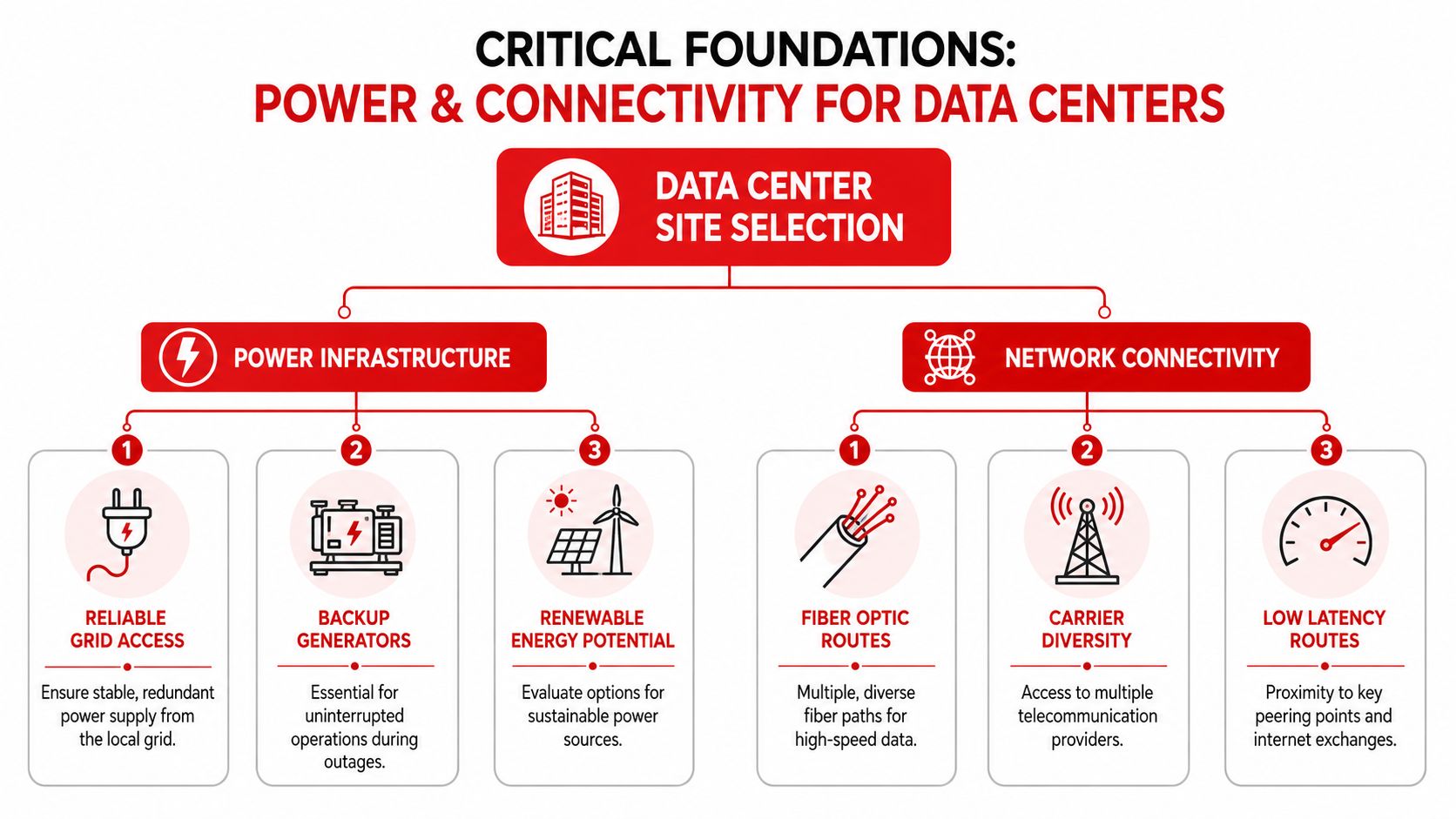
- Power deliverability: Can the utility serve the target load, on a timeline the business can use?
- Connectivity posture: Is there true carrier diversity, not just a fiber line crossing the road?
- Physical site risk: Flood exposure, groundwater behavior, seismic conditions, and constructability.
- Entitlement friction: Zoning fit, approval path, municipal posture, and likely objections.
- Expansion logic: Can the site support a campus plan instead of a one-building compromise?
That process sounds slower. It usually isn't. It prevents teams from spending months validating sites that should have been discarded in the first screening round.
Practical rule: If your first serious diligence call is with a land seller instead of the utility and network side, your sequence is probably wrong.
Engineering-first changes who leads the first phase
This shift also changes who needs to be in the room early. Real estate still matters, but it can't lead alone. Utility specialists, fiber planners, civil engineers, permitting counsel, and operations stakeholders need to shape the shortlist from day one.
Teams that want a broad market view before they pick a region should review our comprehensive reports from Knight Tek. They're useful for pressure-testing assumptions about infrastructure readiness, market saturation, and where hidden constraints tend to appear.
The practical takeaway is straightforward. Don't ask which parcel is available. Ask which location can be powered, connected, permitted, built, and expanded without breaking the business case.
Secure Power and Connectivity Before Anything Else
Power is the first gate. Not land. Not incentives. Not renderings.
CBRE notes that power availability and cost have become the single most critical constraint in global data center site selection, with grid capacity now the primary precondition before design begins, and operators in many major European markets facing multi-year wait times for grid connections in its analysis of effective data center site selection factors. That's why serious teams start utility diligence before they commit to land.
What to verify on power
“Utility available” means very little unless you define it.
You need three answers:
How much capacity is deliverable
The question isn't whether power exists in the region. The question is whether the specific site can get the required megawatts, when needed, with a path to future phases.How resilient the feed strategy is
Look at dual-feed potential, substation relationships, backup generation posture, and whether the operating model depends on utility assumptions that may not hold under stress.How stable the grid behaves
A region can look attractive on paper and still carry curtailment risk, aging infrastructure issues, or service uncertainty that pushes complexity back into your design.
That's where many projects go wrong. They hear “yes” from a utility contact, then discover later that the “yes” really meant a study queue, an upgrade dependency, or a phased energization path that doesn't match the commercial launch date.
A practical way to structure the diligence is to align electrical planning with the broader facility architecture. This overview of data center power distribution systems is a helpful reference for framing what upstream utility decisions mean for downstream redundancy and distribution choices.
Why spillover markets keep winning
In saturated Tier 1 markets, capacity constraints often push developers into nearby spillover locations. That can be a smart move if the secondary market still gives you acceptable access to existing connectivity infrastructure.
The mistake is assuming “nearby” automatically means “good enough.” Some spillover sites preserve network performance and expansion flexibility. Others strand you between weak utility timelines and thin carrier options.
Use a simple comparison:
| Decision area | Strong signal | Warning sign |
|---|---|---|
| Power | Utility can discuss actual deliverability and future phases | Utility only offers broad regional assurances |
| Fiber | Multiple providers with diverse paths | One provider, shared route exposure |
| Campus growth | Room for phased buildings and shared infrastructure | Site fits one building but nothing after it |
| Operations | Clear plan for redundancy and maintenance windows | Design depends on ideal operating conditions |
What to verify on connectivity
Connectivity diligence needs the same rigor as power. “Fiber nearby” isn't enough.
Check for:
- Carrier diversity: More than one provider matters. One conduit bank with multiple logos doesn't equal route diversity.
- Physical path separation: Ask where routes enter, where they converge, and what common points of failure still exist.
- Access to hubs that matter: Proximity to peering locations and established network ecosystems affects performance and commercial attractiveness.
- Scalable bandwidth posture: The site should support growth without forcing a redesign of the outside plant strategy.
A fast power answer with a weak network plan still leaves you with an underperforming site. The inverse is just as dangerous.
The best early-stage site reviews I've seen treat power and fiber as one integrated decision. Utility and network teams review the same map, the same phasing assumptions, and the same launch schedule. If those conversations happen separately, conflicts usually surface later, when fixing them is expensive.
Assess Geographic Stability and Climate Resilience
A site does not become viable because the parcel is under control. I have seen teams secure land, feel good about the purchase, and then discover that groundwater, heat stress, drainage constraints, or seismic requirements changed the build so much that the original deal no longer penciled out.
That is the shift many developers still underestimate. Site selection used to start with acreage and price. For modern data centers, it starts with engineering exposure and the approval risk that follows from it.
Geographic stability affects far more than insurability. It drives grading, foundation design, cooling strategy, stormwater systems, construction sequencing, and long-term maintenance. Rice University's summary of cost and proximity in data center location decisions notes that operators are weighing flood risk, rising groundwater, seismic exposure, extreme heat, and regional growth patterns as part of location strategy. Those factors show up early in design and stay with the project for its full operating life.
Hazard maps need field validation fast
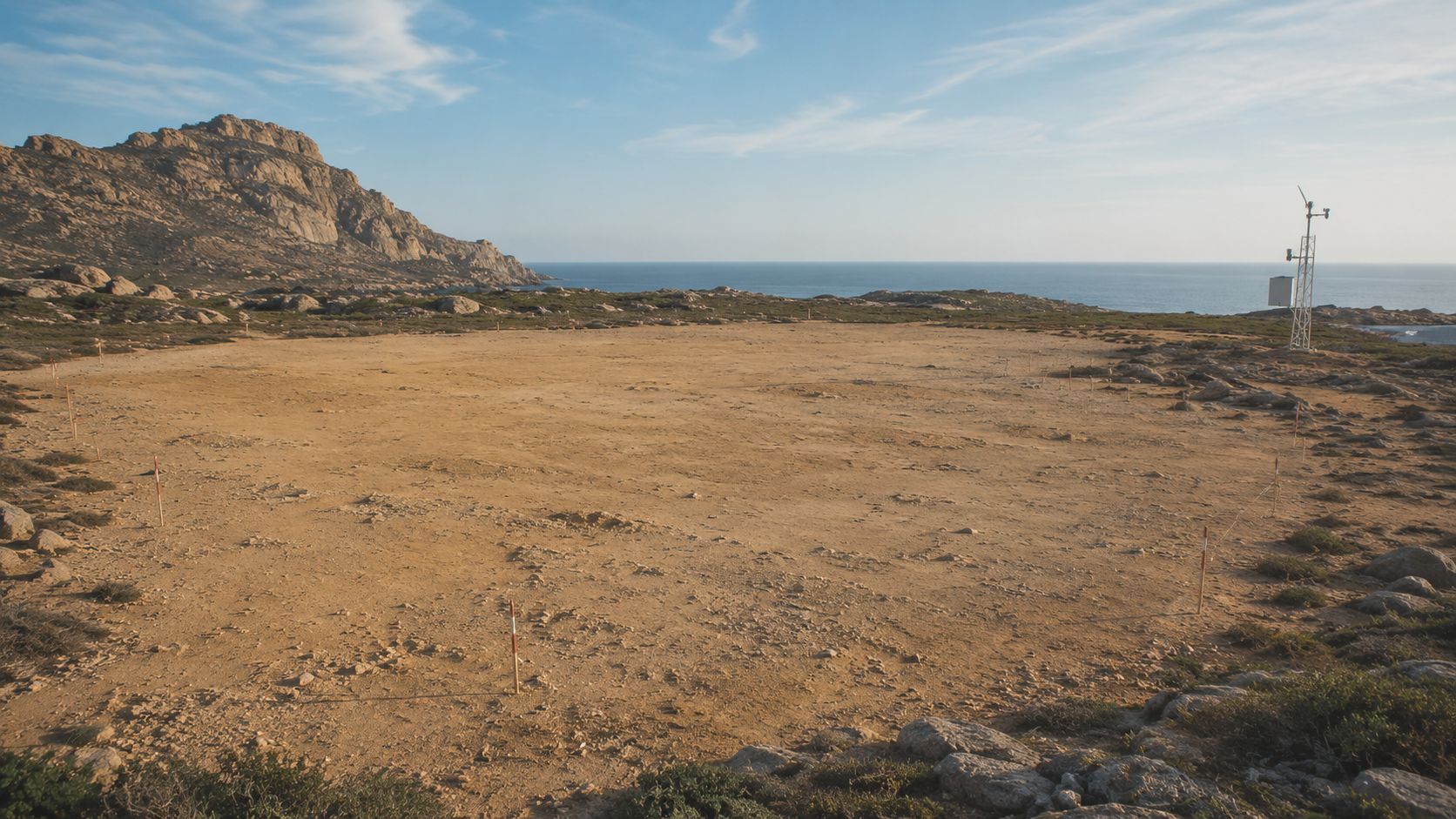
Desktop screening is useful for narrowing a long list. It is not enough to support a land decision.
Flood maps rarely tell the full story after grading changes runoff direction and detention requirements. Groundwater data may indicate a manageable condition on paper, then create expensive waterproofing, dewatering, or below-grade design changes once borings start. Seismic screening can look acceptable until the structural system, equipment anchorage, and insurance requirements are priced together. Heat exposure works the same way. Annual averages matter less than what the site does during prolonged high-temperature periods when the cooling plant is under real strain.
The mistake is waiting too long to put engineers on the ground. By the time geotechnical, civil, and structural teams are brought in, the land contract is often signed and the schedule assumptions are already wrong.
Physical conditions that change the project
Early diligence should answer a harder question than “Is the site buildable?” Nearly any site is buildable at some price. The real question is whether the site still works for the program after design responses are priced and scheduled.
Focus on four areas:
- Flood and groundwater exposure: These affect finished floor elevation, drainage design, underground utility layout, waterproofing scope, and long-term serviceability.
- Seismic conditions: These can change the structural frame, equipment support details, and the insurance profile for the asset.
- Extreme heat and weather volatility: These shape cooling plant selection, water strategy, equipment derates, and the economics of redundancy.
- Subsurface performance: Soil and rock conditions drive excavation methods, retaining needs, foundation type, and the stability of yards and equipment pads.
For teams testing early civil assumptions, this explanation of proper soil bearing for building pads is a useful reminder that a flat parcel can still carry expensive geotechnical surprises.
Real estate logic and engineering logic often point to different sites
Discipline is critical in this process. A broker can show a large parcel near demand with good highway access and attractive pricing. An engineering review may show poor drainage, expensive rock removal, weak soils, wildfire exposure, or a cooling penalty that follows the site forever.
That disconnect is why an engineering-first screen saves money even when it kills a deal you liked.
Urban colocation sites and hyperscale campuses also solve different problems. Sites near dense demand centers may support latency and interconnection goals, but they often come with tighter footprints, harder logistics, and less room to solve environmental constraints through layout. Large greenfield campuses can offer better expansion options and more design flexibility, but only if the civil work, soil conditions, and climate profile support phased delivery without constant redesign.
Sitework planning matters earlier than many teams expect. Access roads, grading balance, drainage corridors, retaining structures, and yard elevations can all become schedule drivers. This guide to heavy civil construction planning is a good reference for understanding how site conditions affect buildability long before vertical construction starts.
Projects rarely fail on a single hazard map. They fail when teams treat climate and ground conditions as due diligence paperwork instead of inputs that reshape design, budget, permitting, and the construction sequence.
Navigate Regulatory Hurdles and Community Relations
Land control does not mean the site is real.
I have seen teams celebrate a signed purchase agreement, then lose months because they treated permitting and public acceptance as cleanup work. That approach comes from an older, real estate-led model of site selection. For data centers, it fails fast. A parcel can look perfect in a broker package and still break down once planners, utilities, environmental reviewers, and nearby residents start asking what the project will demand from the grid, roads, water system, and emergency services.
DC Deployed points to a growing pattern of community energy resistance, where municipalities and neighbors push back on data center projects over energy intensity, water use, and local tax concerns in its review of overlooked data center site selection risks. That risk shows up after site control more often than many sponsors expect, which is why regulatory screening belongs beside power and fiber screening at the start, not near the end of diligence.

Zoning approval is only the first gate
A zoning designation answers one narrow question. It does not answer whether the project can survive hearings, conditions of approval, agency review cycles, or a change in local political mood.
The hidden risk is that technical eligibility often gets mistaken for schedule certainty. A site may allow the use on paper, yet still draw objections around substation expansion, generator noise, visual screening, construction traffic, water strategy, or the perception that the project consumes more local capacity than it returns in jobs and tax value. Once those concerns are public, the schedule stops being controlled by the developer alone.
The better question is simple: can this project get approved on the timeline the business case requires?
The critical path starts before the first hearing
Teams that handle entitlement well do not wait for formal comments to find out what matters locally. They build the approval map early and test it with the people who influence the process. Planning staff, elected officials, utility representatives, fire officials, and public works reviewers often surface different risks, and each one can put days or months onto the critical path.
That work needs engineering behind it. Community concerns are easier to contain when the project team can answer with specifics on noise limits, traffic routing, water demand, backup generation, screening, and energy performance. Even broader operating issues, including how the facility will manage electrical efficiency, can support that conversation. For a useful reference on that side of the discussion, see DLG Electrical for commercial energy efficiency.
A practical approval plan usually includes:
- A full permit matrix early: Land use approvals, environmental review, road access, stormwater, wetlands, utility easements, grading, and any off-site improvement that can trigger another agency.
- Pre-application meetings with decision-makers: Not just planning staff, but also fire, public works, and utility teams that may impose design changes later.
- Public-facing project answers before opposition forms: Noise studies, screening concepts, truck routes, water approach, and operating profile should be prepared before the first hearing notice goes out.
- A stakeholder strategy tied to schedule risk: Nearby landowners, business groups, and municipal leadership affect hearing outcomes in different ways and should be treated accordingly.
Delay usually arrives in small pieces
Projects rarely die from one dramatic rejection. They slip through accumulation.
One agency requests a revised drainage study. A public meeting raises generator noise concerns and triggers another acoustic review. A utility easement issue changes the yard layout. The construction start moves. Long-lead equipment slots tighten. The financing window gets less comfortable. By the time the team admits the site is in trouble, the budget has already absorbed design churn, consultant rework, and lost time.
That is the shift from real estate-first to engineering-first in practice. Regulatory friction and community posture are not soft issues to park in a closing checklist. They are early-stage site filters, and they deserve the same weight as acreage, price, and proximity.
Model Total Cost of Ownership and Plan for Scale
Cheap land is one of the more expensive ways to start a data center project.
I have seen teams celebrate a low purchase price, then spend the next two years absorbing the cost of a weak utility layout, inefficient cooling, awkward yard phasing, and expansion limits that should have ruled the site out much earlier. That is the old real estate-first mistake. By the time those issues show up in design, the team is already emotionally and financially committed to the parcel.
A credible TCO model starts with how the facility will operate, not what the land costs.
Build the model around the actual operating burden
The numbers have to reflect the site you are really building. That includes the first building, the support systems around it, and the second phase that always looks easy on a concept plan and often becomes expensive in the field.
Model three cost layers together:
- Capital cost: Land, earthwork, utility extensions, shell, electrical plant, mechanical systems, security, fiber entrance facilities, and tenant fit-out.
- Operating cost: Power, water where applicable, service contracts, staffing, spares, repairs, compliance, and recurring site services.
- Expansion cost: Additional utility capacity, phased civil work, yard reconfiguration, new network paths, and the interruption risk created by building next to a live facility.
Separating those buckets is how bad sites survive the approval meeting. The first phase looks acceptable, while the long-term operating model carries the penalty.
Test whether the site is forcing the wrong design
A site should support the business case. It should not rewrite it.
That is the key trade-off many teams miss. If the parcel drives the project into a more complex cooling approach, a less efficient electrical distribution scheme, or a compromised redundancy posture, the land is not cheap. It is shifting cost and risk into operations.
Use a simple decision table during diligence:
| If the site forces this | Expect this consequence |
|---|---|
| Reduced redundancy posture | Narrower maintenance windows and higher service risk |
| More complex cooling design | Higher maintenance burden and long-term energy penalties |
| Limited expansion room | Costlier future phases, or no practical path to build them |
| Utility workarounds | Delayed revenue, procurement pressure, and sequencing problems |
Those are not theoretical issues. They show up later as change orders, added headcount, and lower operating flexibility.
Plan the campus, not just the first building
The first building often gets approved with a clean pro forma because the future cost is parked in a later phase. That accounting shortcut causes trouble fast.
If the program is likely to grow, shared infrastructure should be planned at site-selection stage. Substations, cooling plant locations, security lines, internal roads, stormwater strategy, and fiber entrances all get more expensive when each phase solves its own problem independently. Teams that need a practical reference for early development sequencing can review this guide on how to build a data center from planning through delivery.
Energy performance belongs in the same model. Electrical efficiency choices made early affect utility cost every year the facility operates. Operators comparing design options may find useful context from DLG Electrical for commercial energy efficiency when reviewing long-term power quality and efficiency assumptions.
The working question is simple. Does this site still make financial sense after years of operations, maintenance, and at least one expansion phase?
That is the shift to engineering-first site selection in financial terms. A good parcel does not just close. It carries the operating model without forcing expensive compromises later.
From Selection to Go-Live Your Execution Strategy
A good site can still produce a bad project if execution is fragmented.
By the time a site is selected, the team has already made assumptions about utility timing, civil readiness, carrier coordination, phased build-out, equipment procurement, commissioning, and migration. Go-live success depends on turning those assumptions into one coordinated delivery plan instead of handing pieces to disconnected vendors.
The handoff from diligence to delivery
At this stage, many programs lose momentum. The due diligence team exits, the construction team enters, and critical context gets diluted.
Keep one integrated record that carries forward:
- Site constraints that shaped the design
- Utility commitments and open dependencies
- Carrier routing assumptions and entrance path decisions
- Permitting conditions and municipality commitments
- Phasing logic for future capacity
That handoff needs ownership. Someone has to be accountable for reconciling design documents, field conditions, vendor scope, and launch milestones when they collide.
What coordinated execution looks like
Execution improves when the project is managed as one infrastructure system rather than a stack of separate contracts.
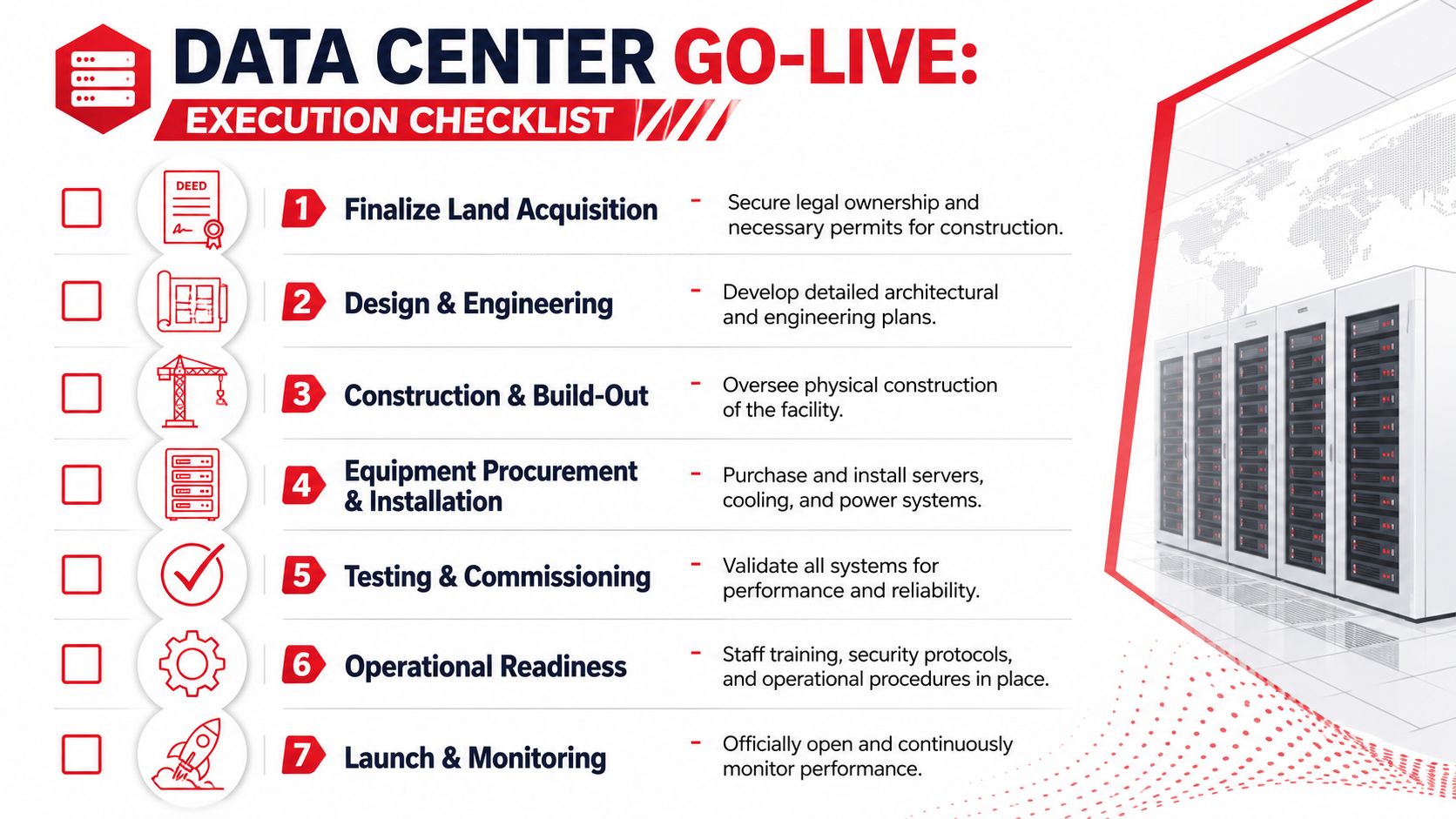
A practical checklist includes:
- Lock the outside plant plan early: Fiber entrances, utility corridors, duct banks, and civil crossings need alignment before sitework closes access.
- Sequence long-lead equipment around actual readiness: Don't buy to an optimistic schedule that permitting or utility work can't support.
- Commission in layers: Test electrical, cooling, network, controls, and structured cabling as integrated systems, not isolated scopes.
- Prepare operations before turnover: Security procedures, documentation, labeling, spare strategy, and escalation paths should be in place before occupancy.
For teams planning that broader path, this overview of how to build a data center is a useful reference for connecting site choice with construction, fit-out, and operational readiness.
One accountable partner reduces coordination risk
The more interfaces you create, the more schedule risk you create.
That doesn't mean one firm must perform every task. It means one lead should own integration across engineering, field execution, testing, documentation, and issue resolution. Without that accountability, the most common failures are predictable: fiber isn't ready when commissioning starts, electrical rooms are physically complete but not documented properly, site civil work conflicts with later network installation, or migration dates get set before the facility is operationally ready.
Good site selection creates possibility. Good execution converts possibility into capacity.
The best data center site selection work ends with a facility that performs the way the diligence model said it would. That only happens when engineering, construction, network deployment, commissioning, and operations planning stay connected all the way to go-live.
If you're moving from site evaluation into design, construction, or infrastructure fit-out, Southern Tier Resources can help bridge that gap. Their team supports end-to-end delivery across fiber, power-integrated infrastructure, structured cabling, construction coordination, testing, and documentation, which is exactly what complex data center projects need once the shortlist turns into a live build.